Ashtanga Asana (Eight-Limbed Pose)
Table of Contents
- Introduction
- How to Do Ashtanga Asana
- Benefits
- Tips for Better Practice
- Why Learn with a Yoga Teacher or Instructor
- Cautions and Contraindications
- Conclusion
- FAQS
Introduction
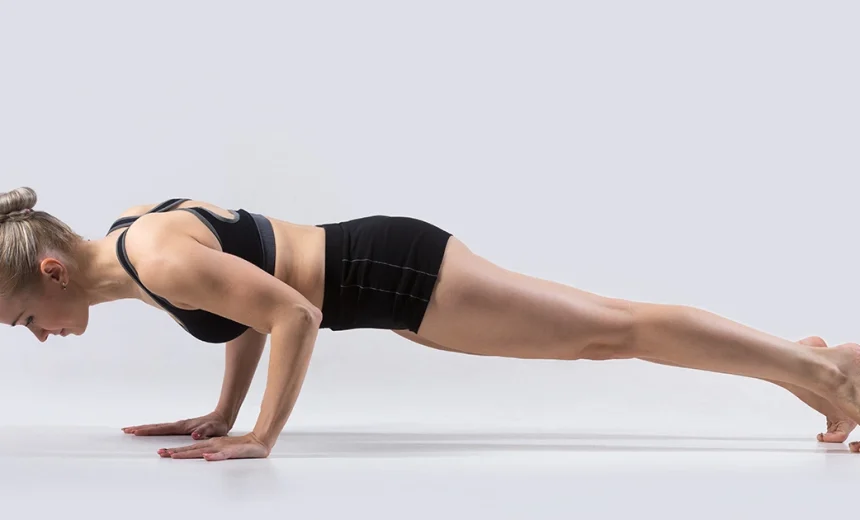
Ashtanga Asana has been replaced by Chaturanga Dandasana in the Sun Salutations of most modern yoga practitioners. The four-limbed staff pose — plank, then lowering to a low push-up position — has become the standard, which has mistakenly turned this traditional shape into mostly a beginner modification.
That framing is somewhat backwards. It is not a less capable version of Chaturanga — it’s a distinct option among traditional hatha yoga poses with a different purpose and different physical demands.
Ashta means eight. Anga means limb. Eight limbs touch the floor: the two feet (or knees), two knees, two hands, the chest, and the chin. The posture creates a specific opening of the chest against the floor while the hips remain lifted, which is distinct from anything that happens in a standard Chaturanga-to-Up-Dog transition.
In the traditional Surya Namaskar B sequence, this is a cornerstone of yoga for beginners, serving as the posture that precedes Bhujangasana. Its value isn’t in what it looks like; it’s in the chest-to-floor contact and the preparatory opening it creates for the Cobra that follows.
How to do Eight Limbed Pose correctly
From Plank Pose or from a kneeling position, bring the knees to the floor. Then lower the chest to the floor, keeping the hips elevated. The chin (or forehead, depending on the tradition) touches the floor.
The eight points of contact: both feet or toes, both knees, both hands, the chest, and the chin. The hips are the highest point — they don’t lower to the floor. The spine creates a gentle curve with the hips at the peak and the chest and chin at the floor.
In some traditions the hands are placed beside the chest with elbows bent and close to the body — the position from which Cobra will rise. In others the hands may be slightly wider.
Hold for 1 to 3 breaths. Transition to Cobra (Bhujangasana) on the next inhale.
If you struggle with alignment or compression in your upper spine, exploring Eight Limbed Pose variations for neck pain—such as resting your forehead down instead of your chin—can provide instant relief.
Benefits
Chest opening and preparatory Cobra setup. The chest resting on the floor in the correct body geometry positions the spine for Bhujangasana. The anterior chest muscles are compressed and the thoracic spine is placed in a mild extension that prepares the body for the deeper extension of Cobra.
Arm and shoulder conditioning. The lowering of the chest from plank to the floor (with hips elevated) requires controlled eccentric work from the triceps and chest muscles. Done slowly, this builds strength in the pushing muscles of the upper body.
Spinal flexibility introduction. For beginners who aren’t yet able to do Chaturanga, Ashtanga Asana provides an entry point into the prone part of the Sun Salutation sequence that maintains spinal mobility work without requiring upper body strength that hasn’t been developed yet.
Thoracic extension awareness. The specific position of chest to floor with hips elevated creates a more acute awareness of thoracic extension than most postures. The practitioner can feel exactly where the sternum is in relation to the floor.
Lower back decompression. With the hips elevated and the chest on the floor, the lumbar spine is in a position that many people find comfortable and relieving, particularly those with anterior disc bulges where extension helps.
Tips for Better Practice
- Don’t let the hips lower to the floor. The hip elevation is what makes this pose distinct. Sagging the hips turns it into a passive prone rest rather than the specific chest-opening position the pose creates.
- Keep the elbows close to the ribs. Splaying elbows reduce the chest-to-floor contact and reduce the mechanical advantage for the Cobra transition that follows.
- Use the chin or forehead depending on neck comfort. Some traditions use chin; others forehead. The forehead option is gentler on the cervical spine, particularly for those with neck sensitivity.
- Transition into Cobra slowly. The setup that Ashtanga Asana creates works best when the transition to Bhujangasana is unhurried — a slow, controlled lift rather than a quick push.
Why Learn with a Yoga Teacher or Instructor
Teachers help with the transition mechanics between poses in a Sun Salutation sequence — particularly the sequencing from Plank to Ashtanga Asana to Cobra. The nuance of how and why Ashtanga Asana prepares the body for Cobra is something that’s best understood through demonstration and guided practice rather than written description.
For beginners using Ashtanga Asana as a Chaturanga modification, a teacher can ensure the hip elevation is maintained and the chest positioning is appropriate.
Cautions and Contraindications
- Wrist injuries: The hands bear weight in a moderately flexed position. Use fists if wrist extension is painful.
- Knee problems: The knees are in contact with the floor and bearing some weight. Use padding and monitor for comfort.
- Neck injuries: Use the forehead-to-floor variation rather than chin-to-floor to reduce cervical extension.
- Pregnancy: No prone lying after the first trimester. Skip this posture in prenatal sequences.
Conclusion
Ashtanga Asana deserves more attention than it gets in modern yoga, where Chaturanga has become the default. The specific chest-to-floor, hips-elevated position it creates does something distinct in the Sun Salutation sequence that a Chaturanga doesn’t replace. Understanding why it’s there — and practicing it with the intention it was designed for — adds a dimension to the sequence that disappears when it’s treated as just a beginner’s modification.
Eight points of contact. Every one of them deliberate.
FAQS
Q: What exactly is Ashtanga Namaskara?
A: It’s a transitional pose in Surya Namaskar where eight points touch the floor — the two feet, two knees, chest, two hands, and chin (or forehead in some traditions). The hips stay lifted off the ground.
Q: Is it the same as a push-up?
A: No. In a push-up the whole body lowers together. In Ashtanga Namaskara the knees go down first, then the chest, while the hips remain up. The order matters.
Q: Who uses this pose instead of Chaturanga?
A: Beginners and practitioners who haven’t developed the arm strength for Chaturanga Dandasana. It’s a valid progression — don’t skip it to do Chaturanga badly.
Q: Does it build arm strength?
A: Some, yes — especially the triceps and chest. But it’s primarily a transitional pose rather than a strength-building hold.
Q: Can I always use Ashtanga Namaskara instead of Chaturanga in Sun Salutations?
A: Yes. Use whichever you can do with good form. A clean Ashtanga Namaskara is better than a collapsing Chaturanga.
Q: What are the eight limbs it refers to?
A: The eight points of contact with the floor: two hands, two feet, two knees, the chest, and the chin.