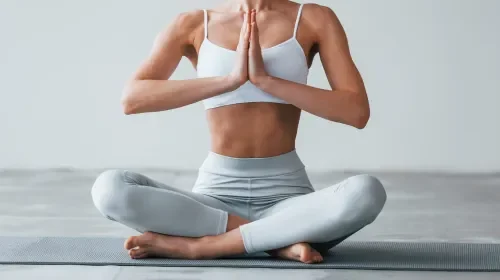
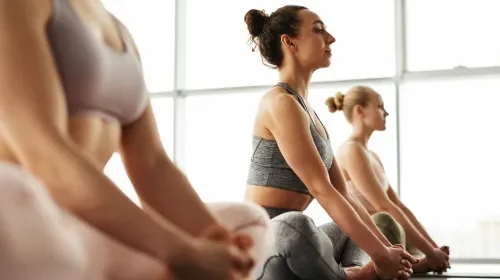
Yoga came from India. Not as a metaphor, not as branding — as a specific body of knowledge developed over centuries, written down in texts like the Yoga Sutras of Patanjali and the Hatha Yoga Pradipika, passed through lineages of teachers who understood it as a complete practice for the body and the mind together. Bharatyogas was built on that understanding, and on 23 years of practice that kept returning to those original sources the longer it went on. What the tradition describes — how postures prepare the body for breath, how breath prepares the mind for stillness, how stillness is actually the point — is what this site is about. The physical instruction here is grounded in that sequence, not separated from it. You’ll find detailed guidance on poses, breath practices, and the philosophical framework that makes sense of both. India gave the world something genuinely useful in this practice. We try to represent it honestly, teach it carefully, and not flatten it into something easier to sell. Wherever you are in the practice, that’s what’s waiting here.
A Smarter Way to Train
Reflections, Stories, and Insights from Our Yoga Practice
Yoga as a Daily Practice for Health, Presence, and Harmony
Yoga as a Daily Practice for Health, Presence, and HarmonyYoga as a Daily Practice for Health, Presence, and HarmonyYoga as a Daily Practice for Health, Presence, and HarmonyYoga as a Daily Practice for Health, Presence, and HarmonyYoga as a Daily Practice for Health, Presence, and Harmony
Yoga as a Daily Practice for Health, Presence, and HarmonyYoga as a Daily Practice for Health, Presence, and HarmonyYoga as a Daily Practice for Health, Presence, and HarmonyYoga as a Daily Practice for Health, Presence, and HarmonyYoga as a Daily Practice for Health, Presence, and Harmony
Explore Our Yoga Services
Mindful Yoga Practices for Balance, Strength, and Well-Being
Yoga is one of the most documented, most studied, and most misrepresented practices in the world. Somewhere between the ancient texts and the modern internet, a large part of what makes it actually useful got lost — replaced with aesthetic content, surface-level instruction, and wellness language that sounds meaningful but doesn’t travel past the screen it’s read on.
Our mission is to close that gap. Bharatyogas exists to teach yoga from its source — the Indian philosophical tradition that produced it, the texts that documented it, and 23 years of practice that tested it against real life. We use technology not to simplify what the tradition says but to carry it further than a single teacher in a single room ever could. Every article, every pose guide, every explanation of a breathing practice on this site is written with one question in mind: does this actually help someone practice better? If the answer is no, it doesn’t belong here.
Our Vision
Most people who start yoga don’t keep practicing for long. The numbers vary, but the pattern is consistent — enthusiasm early, then a plateau, then life gets in the way and the mat stays rolled up in the corner. We think a large part of the reason is that they were only ever given the surface layer. The poses without the philosophy. The movement without the breath. The technique without any understanding of what it’s building toward.
Our vision is a different outcome. We want people practicing yoga at year ten and year twenty — not because they’re disciplined or exceptional, but because the practice is genuinely giving something back at every stage. That kind of durability comes from understanding the tradition deeply enough to navigate it independently. To know when to push and when to rest. To find the thread that connects a morning asana practice to how you handle a difficult conversation in the afternoon. That connection is what the tradition was always pointing at. Making it accessible — through clear writing, honest instruction, and technology that reaches people wherever they are — is what we’re working toward.
Our Goal
The goal is practical and specific: build the most honest, most useful yoga resource available in English and other languages that stays rooted in the Indian tradition yoga actually comes from.
That means detailed asana instruction that explains why a pose works, not just what it looks like. It means pranayama guidance that treats breath practice as the serious discipline it is rather than a warmup exercise. It means engaging with texts like the Yoga Sutras and the Hatha Yoga Pradipika as living material — relevant, applicable, worth understanding — rather than citing them as background decoration. And it means writing about the spiritual dimension of the practice without either dismissing it as mysticism or inflating it into something untestable.
We are also building something that uses technology the way it should be used — to reach more people, to make learning more accessible, and to create a resource that improves over time as the practice itself deepens. Twenty-three years of practice is the foundation. What gets built on it is the ongoing work.