


Twenty-three years ago, yoga in India was learned through teachers, repetition, and the kind of patience that only makes sense once you’ve experienced what it eventually produces. That foundation hasn’t changed. What has changed is how that learning can now travel. Bharatyogas sits at the point where the spiritual tradition and modern technology meet — using the reach that digital platforms make possible to carry material that took decades to understand to people who wouldn’t otherwise have access to it. The texts are the same. The practice is the same. The method of getting it to you is different, and we think that’s worth using well.
That’s the environment this site grew out of — and the tradition it stays rooted in. Guru parampara, the lineage of teacher to student passed down through generations, is how yoga has always preserved what matters most about itself. Not through books alone, not through self-study, but through direct transmission from someone who has lived the practice to someone willing to receive it seriously. That lineage is what we teach from. The texts inform it, technology carries it further, but the chain of human transmission is what keeps the practice from becoming something else entirely.
The first years were almost entirely physical. How to hold a pose. Where the weight goes. Why the breath changes everything the moment you pay attention to it. The body had a lot to say once someone started listening carefully, and the early practice was mostly about developing the ears to hear it — the ability to notice tension before it becomes pain, restriction before it becomes injury, the difference between productive discomfort and the kind that means stop.
By year five or six, something shifted. The physical practice started pointing beyond itself. Not dramatically — there was no single moment of revelation. More like a gradual accumulation of evidence that the poses were doing something to the quality of attention, not just to the flexibility of the hamstrings. That sitting still in the body for long enough changed how the mind moved. That the breath, when actually used rather than just happening in the background, was the most direct tool available for changing one’s internal state — not over weeks of practice, but in the next five minutes if applied with real attention.
This is what the tradition had been describing all along. The Yoga Sutras open with it: yogas chitta vritti nirodhah. Yoga is the settling of the fluctuations of the mind. Every technique — the postures, the breath work, the meditation, the ethical practices that precede all of it — points toward that settling. The asanas aren’t the destination. They’re the preparation.
Understanding that changed the practice. And it’s what Bharatyogas is built on.
Why Indian Roots Matter Here
Yoga has spread across the world, and that spread has produced genuine good — more people practicing, more teachers, more research into what the practice does physiologically and psychologically. None of that is worth dismissing.
But something gets lost when a tradition is lifted from its source without the source being understood. Yoga without its philosophical framework is a stretching routine. Pranayama without understanding what it’s for is breathing exercise. The asanas without the Yamas and Niyamas — the ethical commitments that Patanjali lists before anything else in the eight-limbed path — are physical exercise alone, useful in themselves but missing most of what the practice was built to do.
The Indian roots of yoga matter here not because of nationalism or nostalgia, but because the source material is where the depth lives. The Yoga Sutras of Patanjali describe the mechanics of the mind with a precision that modern psychology is still catching up to. The Hatha Yoga Pradipika explains the relationship between physical practice and breath and the subtler energy body in ways that don’t reduce cleanly to Western anatomical terms but that experienced practitioners recognise as describing something real. The Bhagavad Gita’s chapters on yoga — karma yoga, jnana yoga, bhakti yoga — present a complete philosophy of action and attention that has practical implications for how anyone, in any tradition, chooses to live.
We try to bring that material in — not as decoration, not as cultural authenticity signalling, but as the actual content that gives the practice its depth. Where the texts say something clearly, we say so. Where our own practice corroborates it, we say that too. And where our understanding runs out, we say that rather than bluffing.
What 23 Years Actually Looks Like
It would be dishonest to present 23 years of practice as an unbroken arc of progress and deepening insight. That’s not what it was.
There were years of strong, committed, daily practice. There were also years of sporadic effort and extended gaps. There was a significant injury — the kind that removes the option of the physical practice for months and forces a confrontation with the question of whether the practice was ever really about anything beyond the body. That confrontation was uncomfortable and ultimately more useful than any single year of uninterrupted practice had been.
There were teachers who gave things that are still in the practice today, whose words surface without being summoned, whose adjustments changed the understanding of a pose permanently. There were also teachers who looked more authoritative than they were — learned from by negative example, by noticing what felt hollow and asking why.
There was the slow, undramatic discovery that the practice accumulates differently than most things do. Skills plateau. Knowledge saturates. But the practice of paying attention — of returning, again and again, to what is actually happening in this body, in this breath, in this moment of sitting still — that doesn’t seem to have a ceiling. Twenty-three years in, the quality of attention available in practice is genuinely different from year one. Not more impressive. Just more honest, more patient, more able to stay with what’s uncomfortable rather than immediately rearranging it into something easier.
That’s what we’re writing from.
What You’ll Find Here
The content on this site covers the full range of the practice. For asanas, you’ll find detailed instruction that explains not just what to do but why the alignment matters, what the pose is working on, how to modify it for where you actually are rather than where the demonstration suggests you should be. For breathing practices — Pranayama — you’ll find clear explanations of the techniques and the framework for understanding what they’re doing to the nervous system and the mind. For philosophy, you’ll find the original texts treated as living material rather than historical curiosity.
The site is structured so that a complete beginner can start at the beginning and build systematically. It’s also structured so that someone ten years into their practice can find material that goes further than most yoga content does — into the territory where the practice starts asking questions that alignment cues and flexibility goals don’t cover.
We have a practice, a tradition, and 23 years of working with both seriously. That’s what Bharatyogas is, and that’s what’s on offer here.
Come with genuine curiosity. The practice will do the rest.
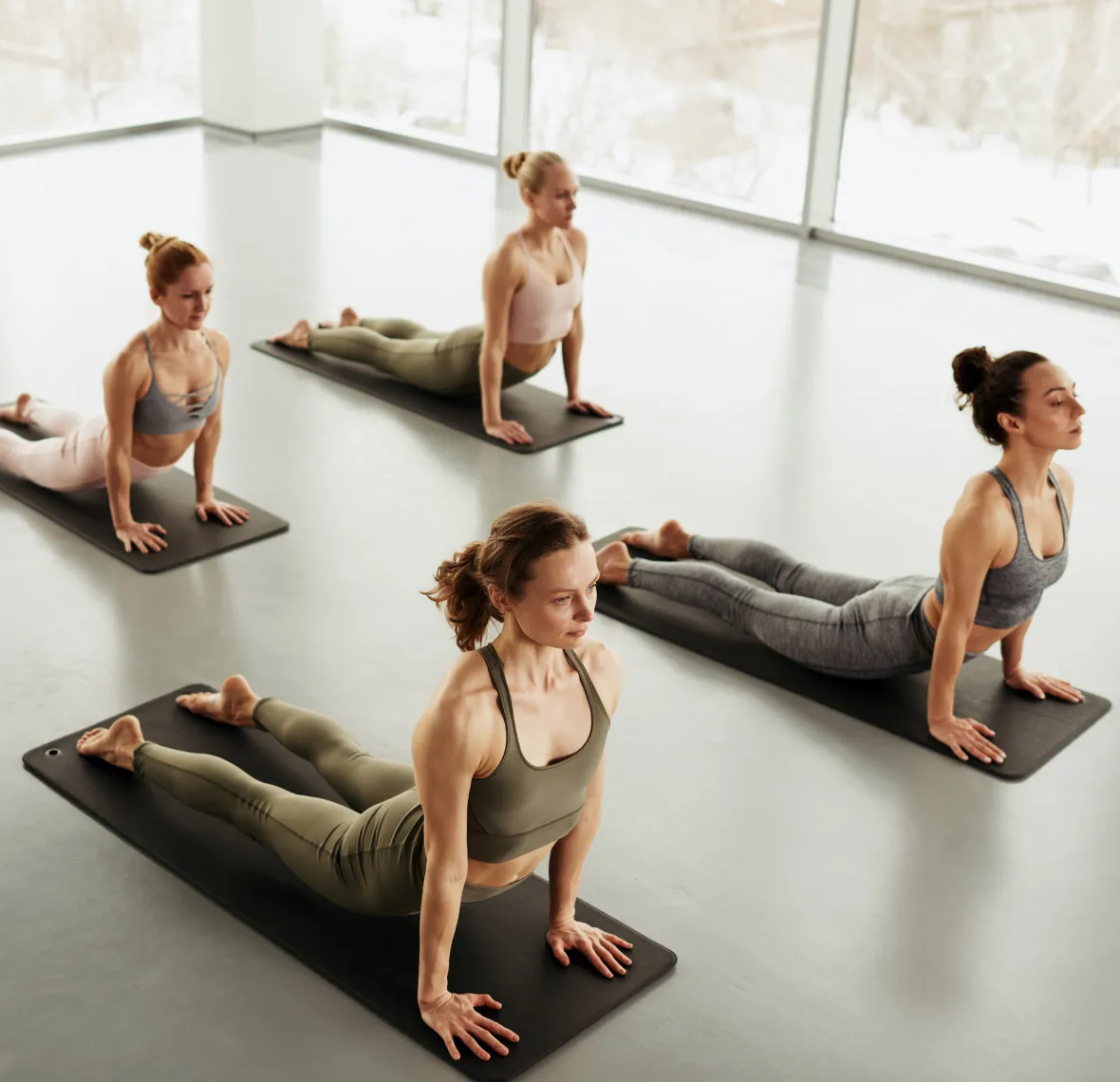
Yoga as a Daily Practice for Health, Presence, and Harmony
A Practice Rooted in Breath, Movement, and Presence

Group Yoga Classes
Practice yoga in a supportive group environment guided by an experienced instructor.
Personal Yoga Sessions
One-on-one yoga tailored specifically to your body, goals, and pace.
Online Yoga Classes
Practice yoga anytime, anywhere with live or recorded online sessions.