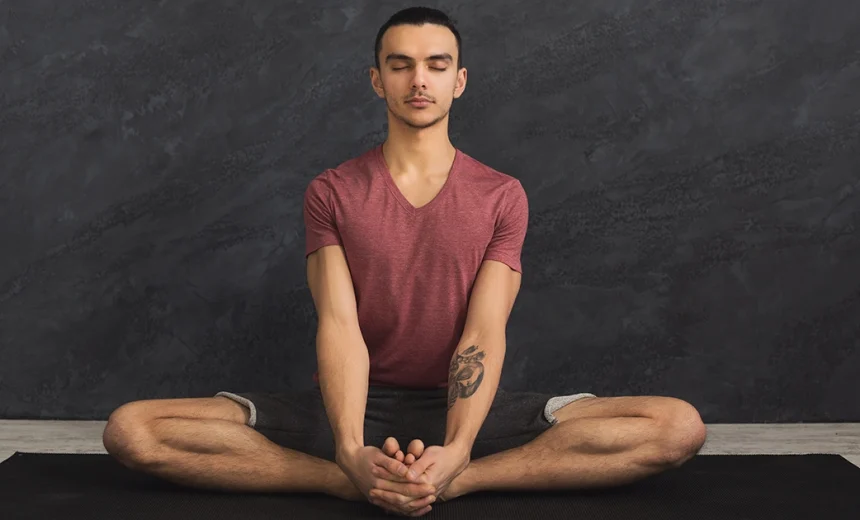
Virasana (Hero Pose)
Table of Contents
- Introduction
- How to Do Virasana
- Benefits
- Tips for Better Practice
- Why Learn with a Yoga Teacher or Instructor
- Cautions and Contraindications
- Conclusion
- FAQS
Introduction
Virasana looks a lot like many traditional resting yoga postures, but it can be surprisingly deceptive. You’re sitting on the floor between your heels — or on a block between your heels — spine upright, hands on the thighs. There’s nothing visually demanding about it.
But spend five minutes in it with tight quadriceps (the large muscles on the front of the thighs) and limited ankle flexibility, and you’ll discover it’s one of the more challenging sustained holds in the practice.
Vira means hero or warrior. The name implies a quality of sustained courage — the kind that isn’t about dramatic action but about staying present with difficulty. This pose requires that quality. It stands out as an excellent element of yoga for tight quadriceps, as the intense front-thigh stretch, the ankle extension, and the knee flexion (the bending action of the knee joint) under load are all things that modern bodies resist. Sitting in the pose for extended periods is exactly the work of opening those resistances gradually.
The posture is distinct from Vajrasana — in Vajrasana, you sit on the heels; in this shape, you sit between them, with the heels on either side of the hips rather than under them. The difference in ankle and quadriceps demand is significant.
How to Do Virasana
Kneel with knees together. Turn the feet slightly outward so the toes point back and slightly to the sides. Widen the feet so they’re just wider than hip-width.
Slowly lower the hips toward the floor between the heels. If the hips reach the floor comfortably and the lower back maintains its natural curve, this is the full pose. If you want to learn how to make Hero Pose more comfortable when your hips hover above the floor or if there’s discomfort in the joints, simply place a folded blanket or yoga block between the heels for the hips to rest on.
Hands rest on the thighs. Spine is upright. The lower back maintains its natural curve without excessive arching.
Hold for 1 to 5 minutes, building gradually over weeks.
To come out, place the hands on the floor beside the hips, lean forward onto them, and bring the legs out to one side before straightening them. Don’t straighten the legs abruptly without this transitional movement — the knee needs a gradual return from deep flexion.
Benefits
Deep quadriceps stretch. The rectus femoris (the central quadriceps muscle crossing both the hip and knee joints) gets one of its most complete stretches here. The knee is in flexion and the hip is in a relatively neutral position, which creates length along the full length of the muscle. This stretch is difficult to replicate in other common postures.
Ankle plantar flexion (the movement where the foot points downward, extending the ankle) stretch. The tops of the feet on the floor with the ankles extended stretches the tibialis anterior (the muscle running along the front of the shinbone) and the extensor tendons (the tissues connecting shin muscles to the toes) of the foot. For people who’ve worn shoes with elevated heels for years, the anterior ankle often has surprising restrictions that this posture gradually opens.
Incredible Hero Pose benefits for knees (when done correctly). This position compresses the knee joint, which some people find counterintuitive for a pose said to support knee health. The benefit is in the synovial fluid (the natural lubricating liquid found within joint cavities) stimulation — the compression and the weight in the position helps distribute synovial fluid to the joint surfaces. This requires the pose to be done within a comfortable range; forced deep flexion with knee pain is different from a manageable stretch.
Digestive support. Like Vajrasana, this posture is sometimes recommended after meals for its effect on increasing circulation to the abdominal region. The kneeling position affects digestion differently than sitting in a chair.
Meditation seat. For people whose hips and ankles have developed the necessary flexibility, this posture is a stable and comfortable meditation seat. The upright spine it creates naturally, without the external rotation challenge of cross-legged positions, makes it practically useful for extended seated practice.
Tips for Better Practice
- Use a block. There’s no achievement in forcing the hips to the floor when they’re not ready. A block between the heels that holds the hips at whatever height is comfortable allows the pose to work without creating knee or ankle strain. Remove height gradually as flexibility develops over months.
- Check the lower back. In the full pose, the natural lumbar curve should be maintained. If the pelvis tucks under and the lower back rounds, add more height under the hips.
- Take the time coming out. The transition from deep knee flexion to straight legs should be slow and deliberate. Straightening the legs abruptly from Virasana can strain the knee joint or create sharp calf cramping. Come forward onto the hands first.
- Build duration slowly. Two minutes this week, three next month. The quadriceps and ankle structures change slowly with consistent practice.
- If the feet cramp, it’s usually the tibialis anterior struggling with the ankle extension. Come out briefly, flex the foot a few times, and return with slightly less ankle extension if needed.
Why Learn with a Yoga Teacher or Instructor
The prop decision — how high the block should be for a given student’s anatomy — is something teachers assess based on watching the knee position, the lower back alignment, and the ankle angle. Getting this right makes the difference between a pose that works and one that just hurts. Teachers also watch for lateral tilting of the pelvis (when one knee is more comfortable than the other) and can offer appropriate modifications.
For students using Virasana as a therapeutic practice for knee recovery (under physiotherapy guidance), a teacher can set appropriate depth and duration and track progress over time.
Cautions and Contraindications
- Knee ligament injuries: The deep knee flexion in Virasana puts significant load on the medial structures of the knee. Active ligament injuries or post-surgical knees require clearance from a physiotherapist and significant prop support.
- Severe ankle stiffness: Introduce gradually with blanket support under the ankles if needed.
- Varicose veins: Prolonged compression in this position can be uncomfortable. Keep holds shorter.
- Meniscal tears: Deep knee flexion may be contraindicated depending on the nature and location of the tear. Get physiotherapy guidance.
Conclusion
Virasana is the pose that teaches you where your body has been and where it’s going. The tight quadriceps from years of sitting, the stiff ankles from years of shoes — they show up clearly and immediately. And the patient, consistent work of opening them — through props, through breath, through showing up regularly — is exactly the kind of practice that changes the body over time.
Heroes don’t always move dramatically. Sometimes they just sit still and stay.
FAQS
Q: Virasana hurts my knees. Should I push through it?
A: No. Knee pain in Virasana usually means the knee joint is being stressed rather than the muscles being stretched. Place a block or folded blanket between the feet and under the sit bones. If the pain persists with props, skip it.
Q: Is Virasana the same as Vajrasana?
A: Similar, but not identical. In Vajrasana the feet are under the hips and you sit on the heels. In Virasana the feet are beside the hips and you sit between them on the floor or a prop. Virasana requires more knee and ankle flexibility.
Q: What does Virasana actually stretch?
A: The quadriceps and hip flexors primarily. The ankle extensors also get worked with sustained sitting. It’s one of the more effective quad stretches in yoga.
Q: Can I do Supta Virasana (reclined hero) without doing the sitting version first?
A: No — get comfortable sitting in Virasana before attempting the recline. Going back without hip flexor and quad preparation is how people hurt their knees and lumbar spine.
Q: Is it okay to sit in Virasana for meditation?
A: Yes, many practitioners prefer it to cross-legged positions because it keeps the spine naturally upright. Use props generously.
Q: How long can I sit in Virasana?
A: 5 to 15 minutes is reasonable once comfortable. Come out slowly and extend the legs to release the knees.