Ardha Chakrasana (Half Wheel Pose): A Backbend You Can Actually Do
Table of Contents
- Introduction
- How to Do Ardha Chakrasana
- Benefits of Ardha Chakrasana
- Tips for Better Practice
- Why Learn with a Yoga Teacher
- Cautions and Contraindications
- Conclusion
- FAQS
Ardha Chakrasana is a highly effective posture for countering the physical toll of modern daily life, where most people’s spines spend the majority of the day in forward flexion. Sitting at a desk, hunching over a phone, driving, eating — almost all of it curves the spine forward. This posture offers the opposite direction: a standing backbend for posture correction that counteracts hours of forward bending in under a minute.
Ardha means half, chakra means wheel, asana means posture. The full Chakrasana (Wheel Pose) is an intense floor backbend. This standing version prepares the spine for deeper yoga backbends, works as a standalone corrective practice, and is accessible to most people from their first yoga class.
That accessibility is not a compromise. Done with proper technique, it delivers genuine benefits to the thoracic spine (the middle and upper back section of the spine), chest, and hip flexors — areas that rarely get the attention they need.
How to Do Ardha Chakrasana
Stand in Tadasana. Place both palms on the lower back, fingers pointing downward, to support the lumbar spine (the lower back region).
Inhale and lengthen the spine upward. On the exhale, gently push the hips slightly forward and begin arching the spine backward. Think about lifting the chest toward the ceiling first — the chest leads, not the lower back.
Let the head follow the natural arc of the spine. The gaze moves upward. Some practitioners drop the head all the way back; others prefer to keep a longer neck. Both are valid; choose based on how your neck feels.
Keep the legs straight with thighs engaged. Breathe steadily in the pose — 20 to 30 seconds is a reasonable hold.
To come out, exhale and slowly return to vertical, using the hands on the lower back as support throughout the movement. Don’t straighten suddenly.
Benefits of Ardha Chakrasana
Thoracic extension. The mid-back becomes stiff and rounded in most people, partly from genetics, mostly from habit. This pose specifically targets this region when practiced with attention to distributing the movement through the whole spine rather than hinging only at the lumbar.
Chest and shoulder opening. As the spine arches back, the pectoral muscles (the large muscles of the chest) and anterior deltoids (the front parts of the shoulder muscles) stretch. This directly counteracts the internal shoulder rotation and chest compression that desk work creates. Better shoulder mobility and easier breathing are practical results.
Hip flexor stretch. Pushing the hips forward in this pose stretches the iliopsoas (the deep inner hip flexor muscle running from the lower spine to the thigh) — the deep hip flexor that attaches from the lumbar vertebrae to the thigh bone. This muscle shortens with prolonged sitting and contributes to lower back tightness. Stretching it regularly helps.
Spinal mobility maintenance. Extension mobility in the spine declines significantly with age if it isn’t practiced. Even gentle chest openers among popular standing yoga poses, done consistently, maintain the range of motion that keeps the spine functional.
Energizing effect. Backbends generally have a mild stimulating effect on the nervous system. Standing backbend practice in the morning tends to increase alertness and lift mood, which many practitioners find more reliably effective than a second coffee.
Tips for Better Practice
Lead with the chest, not the lower back. The most common error is hinging sharply at the lumbar while the upper back stays flat. Focus on lifting the sternum up and back first.
Keep the thighs engaged and avoid locking the knees. Soft engagement protects the knee joints and keeps the legs from buckling. If you are struggling with spatial awareness, utilizing an Ardha Chakrasana for beginners modification—such as widening your stance to hip-distance apart—can improve your balance.
Don’t hold your breath. Backbends create a strong urge to brace — deliberately soften the breathing instead.
If you feel compression in the lower back rather than a stretch in the front body, reduce the depth. A smaller backbend with less lumbar compression is more beneficial than a deeper one that crunches the lower spine.
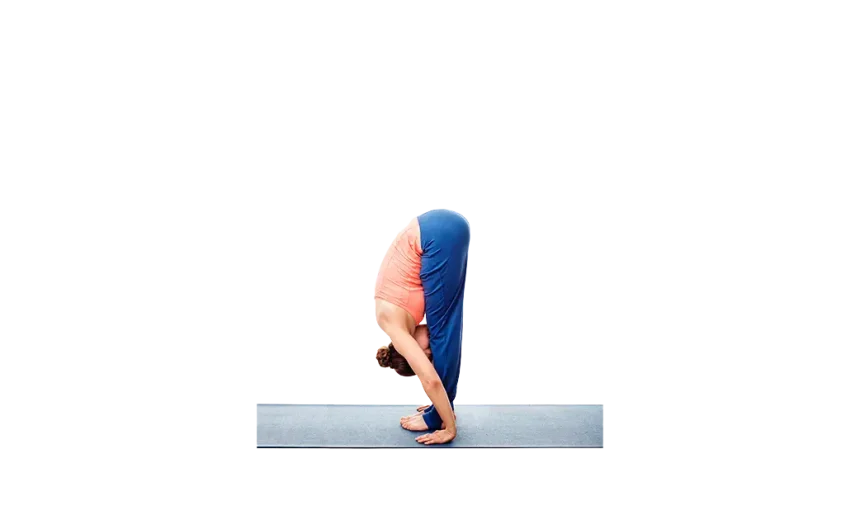
Pair it with a forward fold. Practicing this posture followed by Padahastasana gives the spine both directions of movement in one short sequence.
Why Learn with a Yoga Teacher
Teachers help distribute the backbend through the whole spine rather than concentrating all movement at the lumbar. This is the key technical issue in Ardha Chakrasana and most other backbends, and it’s very difficult to self-correct because you can’t see your own back.
They’ll also watch the knees, hips, and head position — the compensations that happen when the primary movement isn’t happening where it should. Ten minutes with a good teacher on this pose can fix alignment issues that months of self-practice perpetuates.
Cautions and Contraindications
- Lumbar disc herniation or spondylolisthesis: Backbends load the posterior structures of the lumbar spine. Get clearance from a physiotherapist and work only within a safe range.
- Neck injuries: Keep the head neutral rather than dropping it back. The head is heavy; dropping it unsupported stresses the cervical discs.
- High blood pressure and heart conditions: Approach backbends cautiously; consult a doctor if you’re unsure.
- Vertigo: The head movement and change in body orientation can trigger dizziness. Reduce the range of motion and keep the eyes open with a fixed gaze.
Conclusion
Ardha Chakrasana is one of the most practical postures in yoga for modern bodies. It takes less than a minute, requires no equipment, and directly addresses the postural patterns that cause the most widespread discomfort — forward head position, rounded upper back, shortened hip flexors.
Done daily, it works. Quietly, without drama, it counterbalances the hunching that modern life accumulates. That’s worth more than it sounds.
FAQS
Q: Is Ardha Chakrasana the same as a standing backbend?
A: Yes. You stand, place your hands on your lower back, and arch backward. It’s a gentler version before moving to full Chakrasana.
Q: My neck hurts when I drop my head back. What should I do?
A: Keep your chin slightly tucked rather than fully dropping the head. Open the chest first; the neck doesn’t need to be the deepest point of the bend.
Q: Who should avoid Ardha Chakrasana?
A: People with lower back injuries, vertigo, or high blood pressure should be cautious. Pregnancy — especially after the first trimester — is also a contraindication.
Q: Will this help my posture if I sit at a desk all day?
A: It’s one of the better counterpostures for desk posture. It opens the chest and stretches the hip flexors, which tighten with prolonged sitting.
Q: How many times should I practice it?
A: 3 to 5 repetitions in a session is enough. Hold each for about 15 to 30 seconds.
Q: Is it okay to do Ardha Chakrasana before warming up?
A: Not ideal. Do some gentle movement first. Cold backbends are how lower back tweaks happen.