Hastuttanasana (Raised Arms Pose) The Pose That Opens Every Practice
Table of Contents
- Introduction
- How to Do Hastuttanasana
- Benefits
- Tips for Better Practice
- Why Learn with a Yoga Teacher or Instructor
- Cautions and Contraindications
- Conclusion
- FAQS
Introduction
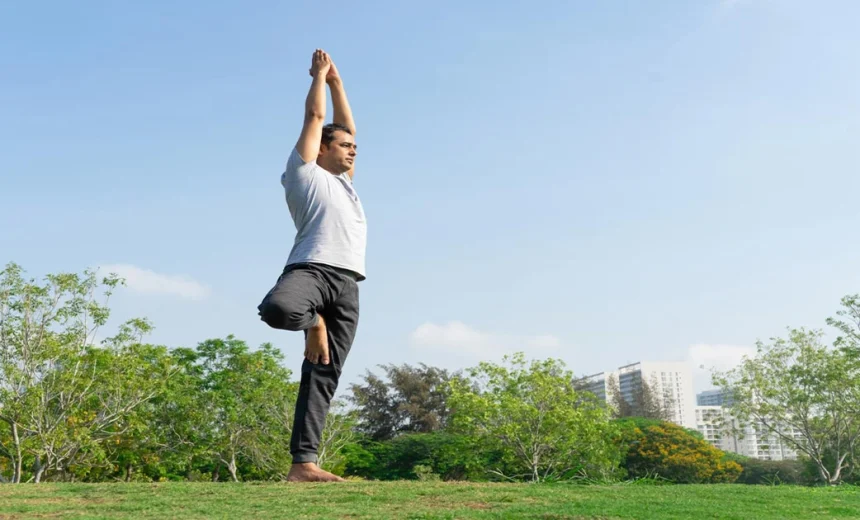
Hastuttanasana is the pose most people do without knowing its name. It’s the second position in the Sun Salutation — standing, arms raised overhead, a slight backbend through the upper spine, gaze upward. Twelve seconds in the flow, then gone.
Hasta means hand. Uttana means raised or stretched. The pose is exactly what the name says: hands raised, body stretched. Simple, foundational, easy to rush past.
The problem with rushing past it is that, done well, Hastuttanasana is a comprehensive opening sequence in itself — lateral stretch, thoracic extension, shoulder mobility, core elongation, and a mild backbend all at once. Done carelessly, it’s just arms up before the forward fold.
Most people do the careless version. This is worth reconsidering.
How to Do Hastuttanasana
Stand in Tadasana. Check that the foundation is right: feet grounded, thighs engaged, spine long, shoulders down.
Inhale and sweep the arms out to the sides and overhead, bringing the palms together or shoulder-width apart above the head. As the arms rise, allow the chest to lift and the upper spine to gently arc into a backbend. The gaze can follow the hands upward or, if the neck is comfortable, look upward toward the ceiling.
The core stays gently engaged — not braced hard, but present. The lower back should feel a gentle extension, not a sharp compression. If it feels like the ribs are splaying forward excessively, draw them slightly in and feel the backbend shift toward the thoracic spine instead.
Hold for 3 to 5 breaths for a standing practice, or move through it on a single inhale in the Sun Salutation flow.
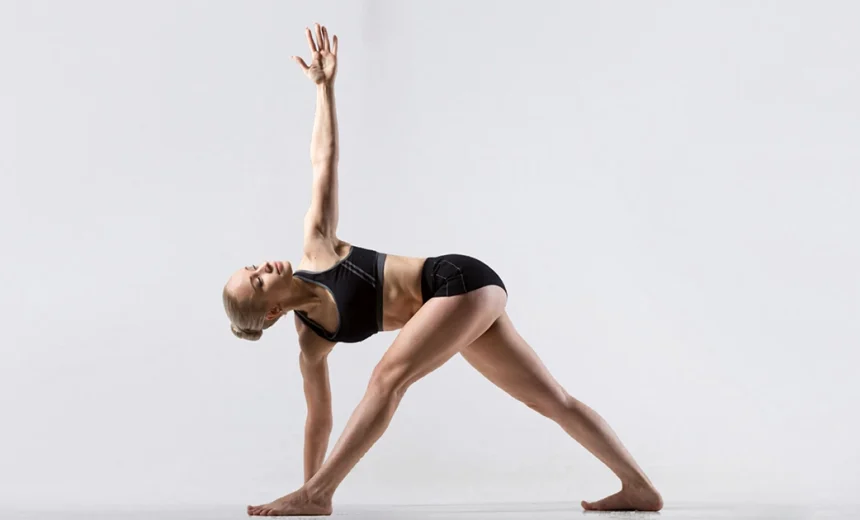
The lateral variation: with arms overhead, take hold of the right wrist with the left hand and lean to the left. The whole right side of the body stretches — from the hip up through the lateral torso, the armpit, and down the inner right arm. Hold for 3 to 5 breaths, return to center, and lean right to stretch the left side.
Benefits
Lateral body elongation. The overhead arm reach creates length through the whole lateral line of the body — the muscles along the side of the torso, the intercostals, the lateral hip, the shoulder and arm. This lateral stretch is one the body rarely gets in daily movement and one that makes breathing easier by creating space in the ribcage.
Thoracic extension. The gentle backbend component of Hastuttanasana specifically works the thoracic spine in extension when practiced with the emphasis placed there rather than in the lumbar. For people with thoracic stiffness (most people), even this mild, standing thoracic extension has a cumulative opening effect over months of daily practice.
Shoulder mobility. Reaching the arms fully overhead requires flexion at the shoulder joint. Many people don’t have complete shoulder flexion range and compensate by arching the lower back rather than genuinely raising the arms. Working this arm position daily — and noticing where the limitation is — builds overhead shoulder mobility progressively.
Chest and anterior shoulder opening. As the arms rise and the chest lifts, the pectoral muscles and anterior deltoids stretch. The arms-overhead position is one of the few daily movements that accesses this stretch.
Full body integration. Hastuttanasana does something less tangible but real: it creates the felt sense of the whole body moving together upward. The ground connection in the feet, the engagement through the legs, the core support, the chest lift, the arm reach — when done consciously, the pose integrates the body into a single upward intention. This is why it opens Sun Salutations and so many other sequences. It’s a beginning.
Tips for Better Practice
- Don’t let the ribs splay. The most common error in Hastuttanasana is arching the lower back aggressively while the ribs push forward. This concentrates the backbend in the lumbar while leaving the thoracic spine flat. Draw the front ribs in slightly and feel the extension shift upward.
- Reach through the fingertips. Not dramatically, but deliberately. The quality of reach through the hands changes the muscular engagement of the whole arm and shoulder.
- For the lateral version: lean the whole body to the side rather than just bending the torso. The hip can shift slightly to the opposite side to deepen the lateral stretch. The reach through the upper arm is the direction to extend into.
- Use it as a genuine breath pose. One breath in, arms rise, one breath out, arms lower. The breath coordination teaches the body to pair expansion with inhalation in a way that carries into the rest of the practice.
- Look up if the neck allows. The cervical extension is mild but real, and it connects the backbend through the whole spine rather than ending it at the shoulders.
Why Learn with a Yoga Teacher or Instructor
The rib-splay pattern — lower back arching while the thoracic stays flat — is one of those things that feels like a full backbend from the inside and clearly isn’t from the outside. Teachers see it immediately and can cue the core engagement that shifts the backbend upward into the thoracic region, which is where it should be in this pose.
For students building toward deeper backbends, a teacher can use Hastuttanasana as a diagnostic and training tool: watching where the arm raising stops being a shoulder and thoracic movement and becomes a lumbar compensatory one is informative about exactly what prep work the deeper backbends need.
Cautions and Contraindications
- Shoulder impingement: Full overhead arm reach may be painful with shoulder impingement. Modify by reaching forward rather than overhead, or keeping the arms at 45 degrees rather than fully vertical.
- Cervical disc problems: Skip the head-back component. Keep the gaze forward or slightly upward.
- Lower back pain with extension: The backbend component may aggravate certain lower back conditions. Reduce the arc and keep the torso more upright.
- High blood pressure: The overhead arm position transiently increases cardiovascular demand. Keep holds brief.
Conclusion
Hastuttanasana is the pose most people are already doing but not fully inhabiting. The difference between sweeping the arms up casually before the next movement and actually arriving in a conscious full-body stretch — lateral, vertical, and thoracic all at once — is not a small difference.
It’s worth spending a few breaths here. The opening it creates, accumulated over years of daily Sun Salutations, is one of the quieter but more consistent contributions yoga makes to how the body feels.
Start there. With arms raised, chest open, whole body reaching upward. Everything else follows from a good beginning.
FAQS
Q: What is Hastuttanasana?
A: Standing in Tadasana, you raise both arms overhead, sometimes with a slight backbend. It’s the second posture in the Surya Namaskar sequence.
Q: Is it just raising your arms?
A: There’s more going on — the whole body should be engaged, with the spine lengthening, shoulders drawing down (not scrunching), and a gentle lift through the chest.
Q: Can Hastuttanasana help with shoulder stiffness?
A: Yes — reaching overhead opens the shoulder girdle and stretches the sides of the torso. It’s a simple but effective shoulder mobilizer.
Q: Who should avoid the backbend variation?
A: People with lower back injuries or high blood pressure. The arms-only version without the backbend is accessible to almost everyone.
Q: How long should I hold Hastuttanasana?
A: It’s usually a transitional pose in sun salutations (one breath), or held for 20 to 30 seconds as a standalone.
Q: My shoulders bunch up near my ears when I raise my arms. How do I fix it?
A: Actively draw the shoulder blades down before lifting the arms. Think “chest up, shoulders down” as the arms rise.