


Tadasana-Mountain Pose

breadcumb-thumb
bharatyogas.com

Tadasana (Mountain Pose)

Table of Contents

  1. Introduction
  2. How to Do Tadasana
  3. Benefits of Tadasana
  4. Tips for Better Practice
  5. Why Learn with a Yoga Teacher
  6. Cautions and Contraindications
  7. Conclusion

Introduction

Most people hear “Mountain Pose” and think: standing up straight. How complicated could it be?

Fairly complicated, as it turns out.

Tadasana is the foundation of every standing yoga posture. Everything — Warrior poses, Triangle, Tree — begins and ends here. And yet most beginners rush past it, treating it like the starting line of a race rather than a destination worth studying. That’s a mistake. Tadasana done properly is an active, engaged, physically demanding pose that reveals a great deal about how you inhabit your body.

In Sanskrit, tada means mountain and asana means posture. The mountain reference isn’t decorative — it describes the quality of stillness and groundedness the pose creates when done well. You’re not just standing. You’re rooted.

How to Do Tadasana

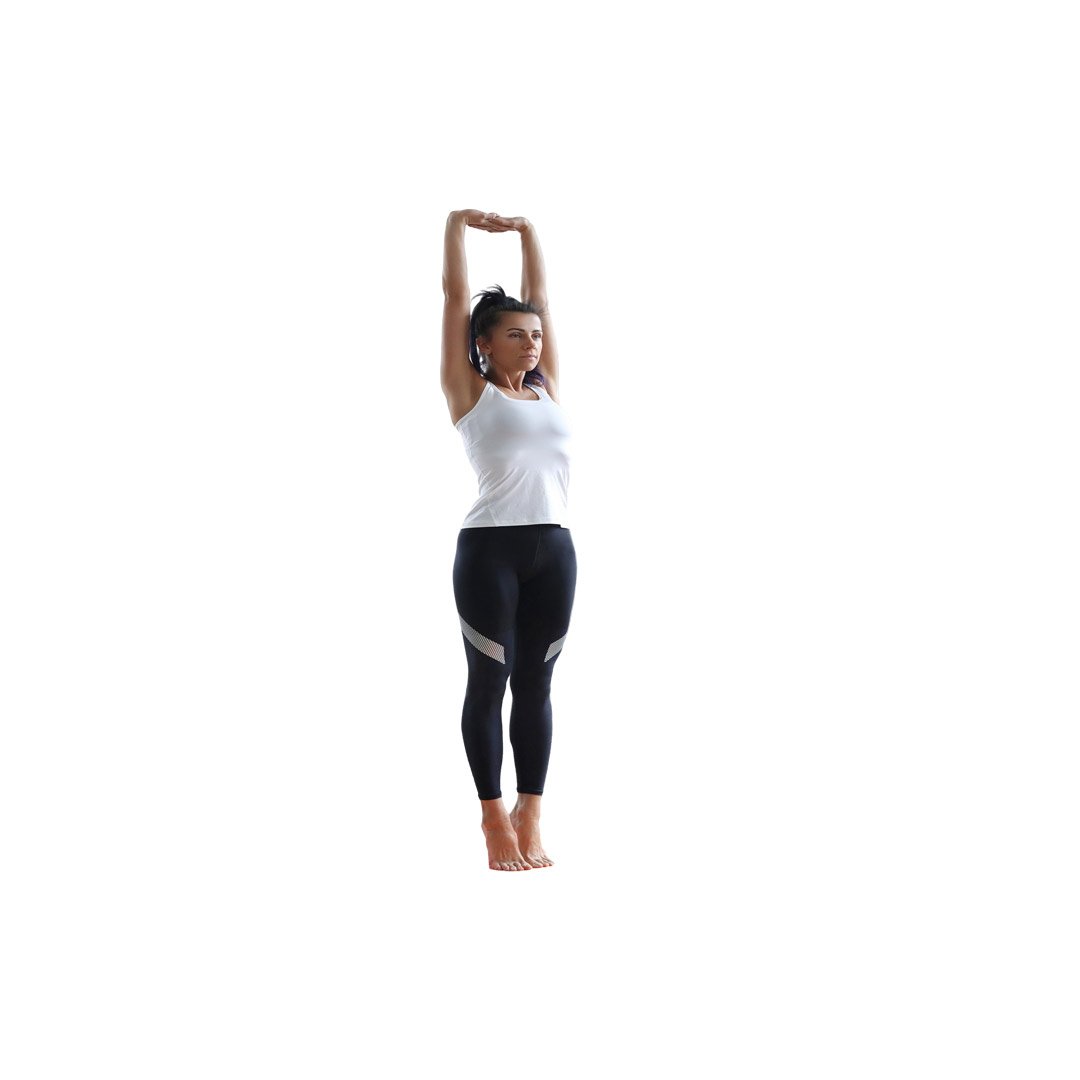
  1. Stand with feet together or hip-width apart. Let the arms hang naturally at your sides, palms facing forward.
  2. Start from the ground up. Press all four corners of each foot into the floor: the ball of the big toe, the ball of the little toe, and both sides of the heel. Feel the weight distribute evenly. Most people discover immediately that they habitually lean forward or favor one foot.
  3. Lift the arches slightly. Engage the thigh muscles without locking the knees — a locked knee pushes the joint backward into hyperextension. Tuck the tailbone just a fraction to bring the pelvis to neutral (not a hard posterior tilt, just enough to stop the lower back from over-arching).
  4. Lengthen through the spine. Lift the sternum without jutting the ribs forward. Let the shoulder blades slide down the back. Arms stay relaxed at your sides or, in some traditions, together in front of the heart in Anjali Mudra.
  5. The head: chin parallel to the floor, crown of the head reaching upward as if a thread is very gently pulling it toward the ceiling. Eyes soft, gaze forward.
  6. Breathe slowly and evenly. Stay for 30 seconds to 2 minutes.

Benefits of Tadasana

Postural correction. Tadasana trains the nervous system to recognize what neutral alignment actually feels like. After years of slouching, desk work, and phone use, most people genuinely don’t know what a neutral spine is until they’ve practiced standing in one for a while.

Balance and proprioception. Even with feet on the floor, the pose requires constant micro-adjustments from the stabilizer muscles of the feet, ankles, and legs. These small muscles — often completely ignored in gym training — get a steady, low-load workout every time you hold this pose.

Reduced tension in the shoulders and neck. The deliberate act of drawing the shoulder blades down and back tends to release the trapezius muscles that most people hold in chronic tension. Five minutes in Tadasana with conscious shoulder awareness does something that hours of screen time undoes.

Mental clarity. Standing upright, breathing evenly, and focusing inward creates a brief window of mental stillness. It’s not meditation exactly, but it’s close. Regular practitioners often describe Tadasana as the moment the mind slows down enough to notice the body.

Foundation for all standing poses. This is the practical one. Every alignment instruction for standing postures borrows from Tadasana: feet grounded, thighs engaged, spine long, shoulders relaxed. Knowing the pose deeply means every standing posture has a clearer reference point.

Tips for Better Practice

  • Close your eyes for 10 seconds while standing in Tadasana. You’ll immediately notice how much your eyes were compensating for the body’s imbalances. The slight wobble when eyes close is useful information.
  • Don’t lock the knees. Soft engagement is different from forcing the joints into hyperextension.
  • Check your weight distribution. Most people lean slightly forward without knowing it. Try pressing the heels consciously into the floor.
  • Video yourself from the side occasionally. The difference between what you feel and what’s actually happening is often surprising.
  • If balance feels shaky, bring feet hip-width apart rather than together. Stability before precision.

Why Learn with a Yoga Teacher

You might think Tadasana is the one pose you don’t need a teacher for. In some ways that’s fair — it’s not dangerous. But a teacher sees things you can’t: whether your weight distribution is even, whether the pelvis is truly neutral or just feels like it is, whether the neck is creating compensatory tension.

A good teacher will also give you something specific to work with in the pose — a breath instruction, a visualization, an alignment cue — that transforms it from “just standing” into a genuine practice. That shift in perception is worth a lot.

Cautions and Contraindications

Tadasana is safe for virtually everyone. A few things to note:

  • Low blood pressure: Standing still for extended periods can cause dizziness. Sit down if you feel lightheaded.
  • Flat feet or severe overpronation: A physiotherapist or podiatrist can advise on foot alignment. Some people benefit from a slight modification in how the feet are placed.
  • Vertigo or balance disorders: Practice near a wall or with a chair nearby. Standing close to support doesn’t diminish the practice.
  • Varicose veins: Prolonged standing may be uncomfortable. Shorter holds or movement between Tadasana and other poses helps.

Conclusion

Tadasana doesn’t get the credit it deserves because it doesn’t look like work. No one photographs Tadasana for Instagram. But the understanding it builds — of balance, alignment, and the quiet discipline of standing well — runs through every other standing posture you’ll ever practice.

Beginners often can’t wait to move on from it. Experienced practitioners often return to it as one of the most interesting poses in the entire practice. That arc is worth paying attention to.

Note: 

Leave a Comment

Your email address will not be published. Required fields are marked *

Tadasana (Mountain Pose)

Table of Contents

  1. Introduction
  2. How to Do Tadasana
  3. Benefits of Tadasana
  4. Tips for Better Practice
  5. Why Learn with a Yoga Teacher
  6. Cautions and Contraindications
  7. Conclusion

Introduction

Most people hear “Mountain Pose” and think: standing up straight. How complicated could it be?

Fairly complicated, as it turns out.

Tadasana is the foundation of every standing yoga posture. Everything — Warrior poses, Triangle, Tree — begins and ends here. And yet most beginners rush past it, treating it like the starting line of a race rather than a destination worth studying. That’s a mistake. Tadasana done properly is an active, engaged, physically demanding pose that reveals a great deal about how you inhabit your body.

In Sanskrit, tada means mountain and asana means posture. The mountain reference isn’t decorative — it describes the quality of stillness and groundedness the pose creates when done well. You’re not just standing. You’re rooted.

How to Do Tadasana

  1. Stand with feet together or hip-width apart. Let the arms hang naturally at your sides, palms facing forward.
  2. Start from the ground up. Press all four corners of each foot into the floor: the ball of the big toe, the ball of the little toe, and both sides of the heel. Feel the weight distribute evenly. Most people discover immediately that they habitually lean forward or favor one foot.
  3. Lift the arches slightly. Engage the thigh muscles without locking the knees — a locked knee pushes the joint backward into hyperextension. Tuck the tailbone just a fraction to bring the pelvis to neutral (not a hard posterior tilt, just enough to stop the lower back from over-arching).
  4. Lengthen through the spine. Lift the sternum without jutting the ribs forward. Let the shoulder blades slide down the back. Arms stay relaxed at your sides or, in some traditions, together in front of the heart in Anjali Mudra.
  5. The head: chin parallel to the floor, crown of the head reaching upward as if a thread is very gently pulling it toward the ceiling. Eyes soft, gaze forward.
  6. Breathe slowly and evenly. Stay for 30 seconds to 2 minutes.

Benefits of Tadasana

Postural correction. Tadasana trains the nervous system to recognize what neutral alignment actually feels like. After years of slouching, desk work, and phone use, most people genuinely don’t know what a neutral spine is until they’ve practiced standing in one for a while.

Balance and proprioception. Even with feet on the floor, the pose requires constant micro-adjustments from the stabilizer muscles of the feet, ankles, and legs. These small muscles — often completely ignored in gym training — get a steady, low-load workout every time you hold this pose.

Reduced tension in the shoulders and neck. The deliberate act of drawing the shoulder blades down and back tends to release the trapezius muscles that most people hold in chronic tension. Five minutes in Tadasana with conscious shoulder awareness does something that hours of screen time undoes.

Mental clarity. Standing upright, breathing evenly, and focusing inward creates a brief window of mental stillness. It’s not meditation exactly, but it’s close. Regular practitioners often describe Tadasana as the moment the mind slows down enough to notice the body.

Foundation for all standing poses. This is the practical one. Every alignment instruction for standing postures borrows from Tadasana: feet grounded, thighs engaged, spine long, shoulders relaxed. Knowing the pose deeply means every standing posture has a clearer reference point.

Tips for Better Practice

  • Close your eyes for 10 seconds while standing in Tadasana. You’ll immediately notice how much your eyes were compensating for the body’s imbalances. The slight wobble when eyes close is useful information.
  • Don’t lock the knees. Soft engagement is different from forcing the joints into hyperextension.
  • Check your weight distribution. Most people lean slightly forward without knowing it. Try pressing the heels consciously into the floor.
  • Video yourself from the side occasionally. The difference between what you feel and what’s actually happening is often surprising.
  • If balance feels shaky, bring feet hip-width apart rather than together. Stability before precision.

Why Learn with a Yoga Teacher

You might think Tadasana is the one pose you don’t need a teacher for. In some ways that’s fair — it’s not dangerous. But a teacher sees things you can’t: whether your weight distribution is even, whether the pelvis is truly neutral or just feels like it is, whether the neck is creating compensatory tension.

A good teacher will also give you something specific to work with in the pose — a breath instruction, a visualization, an alignment cue — that transforms it from “just standing” into a genuine practice. That shift in perception is worth a lot.

Cautions and Contraindications

Tadasana is safe for virtually everyone. A few things to note:

  • Low blood pressure: Standing still for extended periods can cause dizziness. Sit down if you feel lightheaded.
  • Flat feet or severe overpronation: A physiotherapist or podiatrist can advise on foot alignment. Some people benefit from a slight modification in how the feet are placed.
  • Vertigo or balance disorders: Practice near a wall or with a chair nearby. Standing close to support doesn’t diminish the practice.
  • Varicose veins: Prolonged standing may be uncomfortable. Shorter holds or movement between Tadasana and other poses helps.

Conclusion

Tadasana doesn’t get the credit it deserves because it doesn’t look like work. No one photographs Tadasana for Instagram. But the understanding it builds — of balance, alignment, and the quiet discipline of standing well — runs through every other standing posture you’ll ever practice.

Beginners often can’t wait to move on from it. Experienced practitioners often return to it as one of the most interesting poses in the entire practice. That arc is worth paying attention to.

Note: