


Anantasana (Side-Reclining Leg Lift)
Table of Contents
- Introduction
- How to Do Anantasana
- Benefits
- Tips for Better Practice
- Why Learn with a Yoga Teacher or Instructor
- Cautions and Contraindications
- Conclusion
Introduction
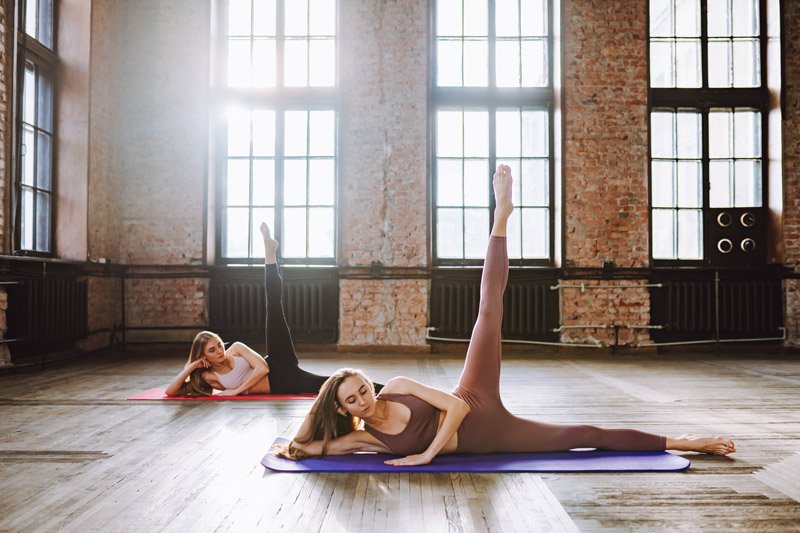
Anantasana is one of yoga’s more unusual postures — a pose done lying on the side, balanced on one hip and forearm, with one leg lifted toward the ceiling. It appears less frequently than most classic asanas, which means many practitioners reach intermediate levels of practice without encountering it. That’s a gap worth filling.
The pose is named after Ananta — another name for the cosmic serpent Shesha on whom Vishnu reclines in Hindu cosmology. The side-lying position, with one arm extended overhead and the body in a single long line, loosely echoes that image.
Practically speaking, Anantasana demands balance in a lateral plane, stretches the hamstrings and inner thigh of the raised leg, strengthens the side body (lateral hip abductors, obliques), and challenges the stabilizers of the shoulder and hip of the grounded side. It does all of this simultaneously, which makes it a more comprehensive posture than its relatively quiet reputation suggests.
How to Do Anantasana
Lie on the right side in one long line — hips stacked, ankles stacked, body extended from head to feet without a curve at the waist. This straight-body starting position is important and harder to achieve than it sounds.
Bring the right arm extended along the floor above the head, in line with the body. Bend the right elbow and prop the head in the right hand, so the forearm is perpendicular to the body and the elbow is on the floor. The head is supported; the neck doesn’t need to work.
Press the right hip and the right outer foot gently into the floor to establish stability.
Now bend the left knee and take hold of the left big toe with the left hand (using the first two fingers and thumb in Yogi Toe Lock). Slowly extend the left leg upward, straightening it as much as possible while the hand holds the toe.
The pose is held for 20 to 45 seconds. Then lower the leg, release the toe, and switch to the left side.
If taking the toe is currently impossible, hold the ankle, the calf, or use a strap looped around the foot.
Benefits
Hamstring and inner thigh stretch. The extended raised leg provides a significant stretch in the hamstrings of that leg. With the leg moving toward vertical, the stretch deepens with control — the hand on the foot acts as a guide rather than a force, which is safer for the hamstring than aggressive gravity-assisted stretching.
Lateral hip and core strengthening. The grounded side of the body — particularly the hip abductors and the lateral obliques — works to maintain the stacked hip position and prevent the pelvis from rolling. This is one of the few yoga postures that specifically targets the lateral hip stabilizers, which are crucial for healthy gait and knee tracking.
Shoulder and rotator cuff stability. The grounded arm supports the body weight through the shoulder in a lateral position. This is a relatively unusual load angle for the shoulder joint and engages the rotator cuff in a way that most vertical arm-loading poses don’t.
Balance in the lateral plane. Most balance training in yoga is either vertical (standing poses) or anterior-posterior (arm balances). Anantasana adds lateral balance, which is the plane most often involved in daily falls and the plane most often undertrained.
Spinal lateral extension. Maintaining the long body line from head to foot requires the lateral spinal muscles (quadratus lumborum) to actively work to prevent the waist from sagging toward the floor.
Tips for Better Practice
- The straight body line matters from the start. Before lifting the leg, check that hips are stacked and the waist isn’t sagging. The side of the waist should be long, not collapsed.
- The grounded hip does the balance work. Keep the outer right hip pressing gently into the floor throughout. If the hip rolls, the pose is less stable and the stretch pattern changes.
- Use a strap. There’s no shame in looping a strap around the foot and holding the strap rather than the toe. This allows the leg to straighten more fully without the grip compromising the alignment of the rest of the body.
- The head in the hand is support, not compression. The neck should feel long. If the neck is strained, lower the elbow position or use a folded blanket under the ear.
Why Learn with a Yoga Teacher or Instructor
The alignment in this pose is genuinely difficult to self-assess. Whether the hips are truly stacked, whether the waist is maintaining its length, whether the raised leg is tracking in the right plane — all of these are easier to see from the outside than to feel from within. A teacher’s eye and specific verbal cuing makes the difference between doing the pose and doing it with the alignment that makes it effective.
Cautions and Contraindications
- Hamstring injuries: The leg extension creates significant hamstring stretch. Rest active hamstring injuries before practicing.
- Shoulder problems: The weight-bearing on the grounded shoulder may aggravate rotator cuff injuries or shoulder impingement.
- Hip problems: Lateral loading of the hip can aggravate certain hip conditions (labral tears, bursitis). Monitor carefully.
- Neck injuries: Ensure the head is genuinely supported by the hand. If the grounded arm position causes neck strain, use additional support (blanket under the head).
Conclusion
Anantasana is a pose that surprises people. It looks modest until you try to do it with proper alignment, at which point the lateral balance challenge, the hip stability demand, and the hamstring stretch all make their presence felt simultaneously.
It belongs in a well-rounded practice. The lateral plane of movement it works is one that most yoga sequences ignore, and the hip stabilizer strength it builds is directly relevant to how the body moves through daily life.
