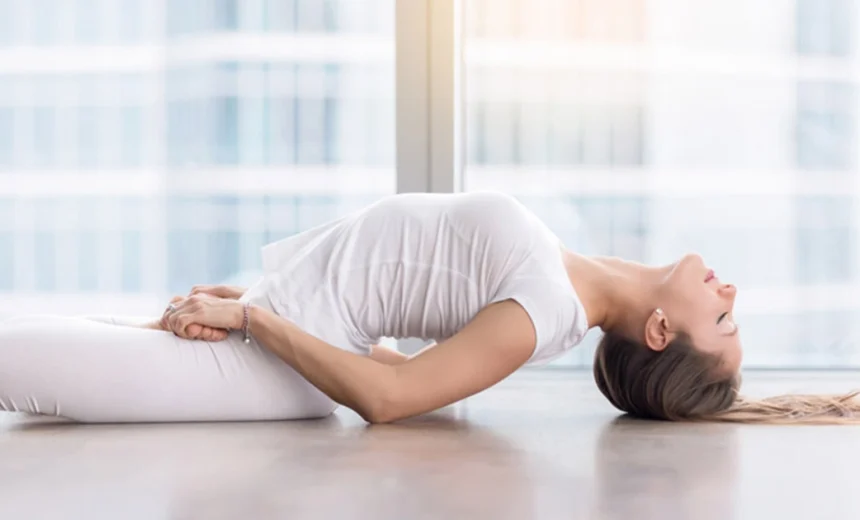


Dandasana — Sitting (Staff Pose)
Table of Contents
- Introduction
- How to Do Dandasana (Seated)
- Benefits
- Tips for Better Practice
- Why Learn with a Yoga Teacher or Instructor
- Cautions and Contraindications
- Conclusion
- FAQS
Introduction
Dandasana functions as the essential base for many seated yoga poses and is the seated equivalent of Tadasana. Simple to describe — sit with both legs extended, back straight, hands on the floor — it is significantly more demanding than it appears.
Danda means staff or rod. The body in seated shape is the rod: spine vertical, legs extended, the whole sitting figure as upright and straight as possible. It’s an essential component of yoga for posture, serving as the starting position for Paschimottanasana, Janushirsasana, Navasana, and most seated postures. Getting it right matters because every forward fold and every seated twist begins here.
Most adults who’ve been sitting in chairs for decades find that sitting with legs extended and a straight back is uncomfortable within 30 seconds. The hamstrings are tight and pull the pelvis into a backward tilt, which rounds the lumbar and makes a straight spine unavailable without a fight. This position reveals this immediately and honestly.
How to Do Dandasana (Seated)
Sit on the floor with both legs extended straight in front of you, feet together or hip-width apart. The inner thighs should be rotating slightly downward and inward — a subtle internal rotation (an inward turning movement of a limb toward the midline of the body) that helps the legs sit flat on the floor.
Press the hands into the floor beside the hips. This is not just a place to put the hands — pressing actively through the palms helps lengthen the spine upward.
Engage the quadriceps slightly, pressing the backs of the knees toward the floor. Flex the feet, toes pointing toward the ceiling. Learning how to sit in Staff Pose with tight hamstrings simply means prioritizing an upright spine above keeping the legs locked flat on the floor.
The spine is upright — not military-stiff, but genuinely long. The chest is open. The chin is level. The shoulders are relaxed.
Hold for 30 seconds to 2 minutes, or use it as the starting position for other postures.
Benefits
Spinal extension awareness. Dandasana makes immediately clear whether the lumbar spine can maintain its natural curve in the seated position with legs extended. Most people find it cannot, due to hamstring tightness pulling the pelvis backward. This is exactly the information the practice needs — knowing this, practitioners can use a folded blanket to restore the pelvis to a neutral position and work from there.
Hamstring and calf stretch. Sitting with legs extended and flexed feet provides a passive stretch through the hamstrings and calves. The sustained hold, with the weight of the legs and the vertical torso creating gentle traction, produces a mild but real flexibility contribution over time.
Postural strengthening. Maintaining an upright spine without a backrest requires active work from the erector spinae and the deep stabilizers of the lumbar spine. The duration of seated practice builds endurance in these muscles.
Seated body awareness foundation. Before any seated posture — forward fold, twist, or hip opener — the practitioner must know how to sit. Dandasana teaches this explicitly: where the sit bones are, what pelvic neutral feels like, how to use the hands on the floor to lengthen the spine.
Tips for Better Practice
it on a folded blanket if the pelvis immediately tilts back. Elevating the hips even 2 to 3 inches can restore the pelvis to neutral and make an upright spine possible.
Press actively through the hands. The hand pressing isn’t for balance — it’s for spinal length. Press and feel the spine lengthen upward in response.
Flex the feet deliberately. The feet often relax into a loose neutral. Active dorsiflexion (the ankle movement that pulls the toes upward closer to the shinbone) engages the quadriceps and maintains the appropriate leg position.
Check the lower back. It should have its natural, gentle lumbar curve — not flat, not over-arched. If it immediately flattens and rounds, exploring targeted Staff Pose modifications for lower back pain is your most appropriate response.
Why Learn with a Yoga Teacher or Instructor
The blanket height question — how much elevation is appropriate for a given student’s hamstring flexibility — is something teachers assess by observing the pelvic tilt in the seated position. They’ll also check whether the hands are actually pressing upward through the spine or just resting passively, and whether the quadriceps engagement is helping maintain the leg position.
Cautions and Contraindications
- Severe hamstring tightness causing pain: Sit on enough blanket support that the pose is challenging but not painful. The hamstrings should stretch; they shouldn’t scream.
- Lower back disc problems: Lumbar flexion from hamstring tightness pulling the pelvis backward can increase disc pressure. Use blanket support to maintain neutral pelvis.
- Sciatica: Monitor whether the seated leg-extended position aggravates symptoms.
Conclusion
Dandasana is where seated yoga begins. Not the most exciting posture in any sequence, but the one that everything else grows from. A practitioner who understands their seated body — where their pelvis is, what their hamstrings allow, how to use the hands to lengthen the spine — practices every seated posture that follows with more precision and more safety.
Start here. Know this. The rest of the seated practice depends on it.
FAQS
Q: Dandasana looks easy. Why is it hard?
A: The appearance is deceptive. Sitting with legs straight, spine fully upright, and no support from the hands is surprisingly demanding on the hip flexors and core. Tight hamstrings pull the pelvis into a posterior tilt, which forces the lower back to round. Most people’s Dandasana looks like a slump.
Q: Should my hands be on the floor beside my hips?
A: Yes — fingertips press into the floor to help lift the spine. Don’t lean on them.
Q: How do I keep my spine upright if my hamstrings are tight?
A: Sit on a folded blanket to tilt the pelvis forward. This one adjustment makes Dandasana accessible for most people with tight hamstrings.
Q: Is Dandasana a warm-up pose or a pose in itself?
A: Both. It’s the foundation of all seated poses and worth practicing as a standalone for spinal alignment and hip flexor engagement.
Q: My lower back rounds no matter what I do. What’s happening?
A: Almost certainly tight hamstrings pulling the pelvis backward. Use a blanket under the hips and work on hamstring flexibility separately.
Q: How long should I hold Dandasana?
A: 30 to 60 seconds. It’s a baseline pose, not a peak pose.