
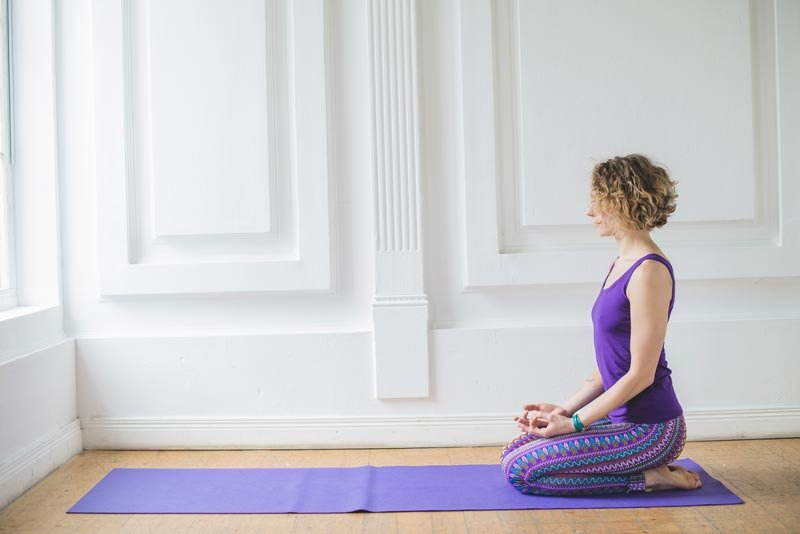
Vajrasana, also known as the Thunderbolt Pose or Diamond Pose, is a simple seated posture in yoga that provides significant physical and mental benefits. Derived from the Sanskrit words Vajra (thunderbolt or diamond) and Asana (pose), it is considered a grounding posture, promoting stability and mindfulness. Unlike most yoga poses, Vajrasana is unique as it can be performed immediately after meals, making it a go-to pose for improving digestion and calming the mind.
Steps to Perform Vajrasana
- Starting Position: Kneel on the floor, keeping your knees and ankles close together. Point your feet backward so the tops of your feet rest flat on the floor.
- Sit on Your Heels: Lower your hips to rest on your heels, ensuring that your thighs press against your calves. Your big toes should touch, and your heels should be slightly apart to create a seat for your hips.
- Align Your Spine: Keep your back straight and your head aligned with your spine. Relax your shoulders and place your hands on your knees, palms facing downward.
- Focus on Your Breath: Close your eyes or keep a soft gaze and take slow, deep breaths. Feel the connection of your body to the ground.
- Hold the Pose: Remain in Vajrasana for 5-10 minutes or as long as comfortable. For beginners, starting with 2-3 minutes is recommended, gradually increasing over time.
- Release the Pose: To exit, lift your hips off your heels, stretch your legs forward, and gently shake them to release any stiffness.
Benefits of Vajrasana
- Improves Digestion: Enhances blood flow to the stomach and aids in better digestion, especially when practiced after meals.
- Relieves Gas and Bloating: Helps alleviate discomfort caused by indigestion or gas by compressing the abdomen gently.
- Strengthens the Spine: Promotes a healthy posture by strengthening the back and relieving tension in the lower spine.
- Calms the Mind: Encourages mindfulness and relaxation, reducing stress and anxiety.
- Enhances Circulation: Improves blood flow to the pelvic region, benefiting reproductive health and alleviating menstrual discomfort.
- Supports Meditation: Serves as a stable and comfortable base for meditation or pranayama (breathing exercises).
- Reduces Knee and Joint Pain: When practiced carefully, it can strengthen the lower body joints over time.
- Promotes Focus: The stillness of the pose aids concentration and mental clarity.
Tips for Practicing Vajrasana
- Use Props if Necessary: If sitting on your heels is uncomfortable, place a cushion or folded blanket between your calves and thighs for support.
- Maintain Alignment: Keep your back straight and avoid slouching to prevent strain on your spine.
- Start Gradually: Begin with shorter durations and gradually increase as your flexibility improves.
- Focus on Breathing: Deep, mindful breathing enhances the calming and digestive benefits of the pose.
- Pair with Meditation: Use Vajrasana as a seated posture for meditation or breathing exercises to deepen your practice.
- Perform After Meals: Unlike most yoga poses, Vajrasana is ideal for practice immediately after eating to support digestion.
Cautions and Contraindications
- Knee Pain or Injury: Avoid Vajrasana if you have severe knee pain, arthritis, or a recent knee injury. Use modifications or consult a yoga instructor for guidance.
- Ankle Discomfort: If your ankles feel strained, place a folded blanket under your feet for added support.
- Pregnancy: Pregnant practitioners should practice Vajrasana with care, avoiding excessive pressure on the abdomen.
- Sciatica: Those with sciatica or lower back issues should consult a healthcare professional before practicing this pose.
- Circulatory Issues: If you have blood circulation problems or numbness in your legs, take frequent breaks and avoid holding the pose for too long.
- Avoid Overstraining: Do not force your body into the posture; use modifications as needed to avoid strain.
Vajrasana is a powerful yet simple yoga pose that offers a host of physical and mental benefits. Its unique ability to improve digestion and provide a stable base for mindfulness practices makes it an indispensable part of any yoga routine. By practicing Vajrasana regularly and with proper alignment, you can cultivate greater stability, inner calm, and overall well-being. Whether as part of a yoga sequence or after a meal, Vajrasana is a grounding posture that can transform your practice and daily life.