


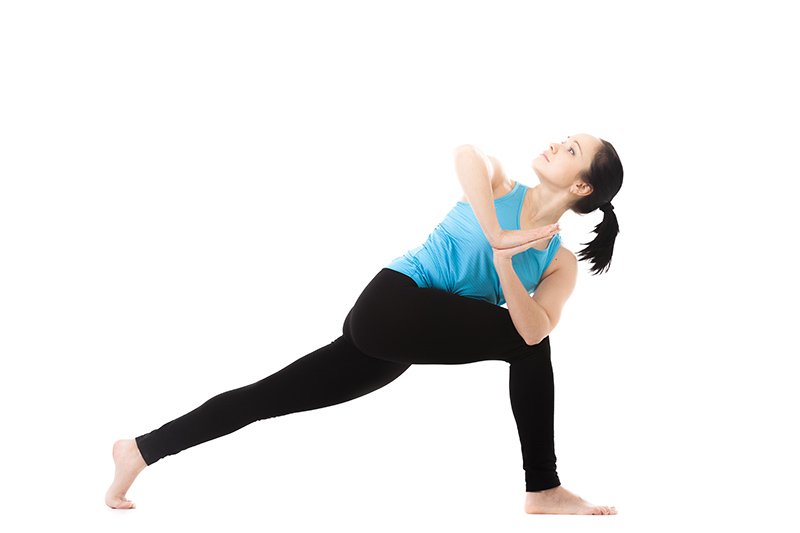
Utthita Parsvakonasana, or Extended Side Angle Pose, is a powerful standing yoga posture that builds strength, improves flexibility, and enhances body awareness. The name comes from Sanskrit: Utthita (extended), Parsva (side), Kona (angle), and Asana (pose). This asana creates a strong lateral stretch along the side body while grounding the lower body, making it an excellent pose for developing endurance, balance, and alignment. It is commonly practiced in both beginner and intermediate yoga sequences.
Steps to Perform Utthita Parsvakonasana
- Starting Position: Begin in Tadasana (Mountain Pose), standing tall with your feet together.
- Step Your Feet Apart: Move your feet about 3.5 to 4 feet apart. Extend your arms sideways at shoulder height.
- Turn Your Foot: Turn your right foot out 90 degrees and your left foot slightly inward (about 15 degrees). Align your right heel with the arch of your left foot.
- Bend the Front Knee: Bend your right knee so it is directly above your ankle, forming a 90-degree angle. Keep your left leg straight and strong.
- Lower the Right Hand: Bring your right hand down to the floor beside your right foot. If this is difficult, rest your hand on your thigh or use a yoga block.
- Extend the Left Arm: Stretch your left arm overhead, creating a straight line from your left heel to your fingertips. Keep your palm facing downward.
- Open the Chest: Rotate your chest upward and keep your torso open. Avoid collapsing into the lower hand.
- Gaze Upward: Look toward your extended left arm or keep your gaze forward if it feels more comfortable.
- Hold the Pose: Stay in this position for 20–30 seconds, breathing deeply and steadily.
- Return and Switch Sides: Inhale and come back to the starting position, then repeat on the other side.
Benefits of Utthita Parsvakonasana
- Strengthens Legs and Core: Builds endurance in the thighs, knees, ankles, and abdominal muscles.
- Improves Flexibility: Provides a deep stretch to the groin, hips, hamstrings, and side body.
- Enhances Balance and Stability: Develops coordination and grounding through strong lower-body engagement.
- Stimulates Digestive Organs: The stretch and compression improve digestion and metabolism.
- Opens Chest and Shoulders: Expands the chest, improving breathing and lung capacity.
- Boosts Energy Levels: Activates the entire body, reducing fatigue and increasing vitality.
- Improves Posture: Encourages proper alignment of the spine and strengthens supporting muscles.
Tips for Practicing Utthita Parsvakonasana
- Focus on Alignment: Keep your front knee aligned with your ankle and avoid letting it collapse inward.
- Engage the Core: Activate your abdominal muscles to support the spine and maintain balance.
- Use Props: A yoga block under the lower hand can help maintain proper alignment without strain.
- Avoid Leaning Too Much: Do not put excessive weight on the lower hand; the strength should come from your legs and core.
- Keep the Body Extended: Aim to create one long diagonal line from the back foot to the fingertips.
- Breathe Deeply: Controlled breathing helps sustain the pose and enhances its benefits.
Cautions and Contraindications
- Knee Issues: Avoid deep bending if you have knee pain or injury; keep the bend shallow.
- Neck Problems: Do not look upward if it causes discomfort; keep your gaze forward or downward.
- Low Blood Pressure: Rise slowly from the pose to prevent dizziness.
- Hip or Groin Injuries: Practice gently or avoid if you feel pain in these areas.
- Back Problems: Maintain proper alignment and avoid over-stretching the spine.
- Beginners: Start with shorter durations and gradually increase as strength and flexibility improve.
Utthita Parsvakonasana is a dynamic and energizing yoga posture that integrates strength, flexibility, and balance. It offers a full-body workout while promoting stability and focus. With regular and mindful practice, this pose can significantly improve physical endurance, posture, and overall well-being. As with all yoga practices, it is important to listen to your body, use modifications when needed, and progress gradually to experience the full benefits safely.
