


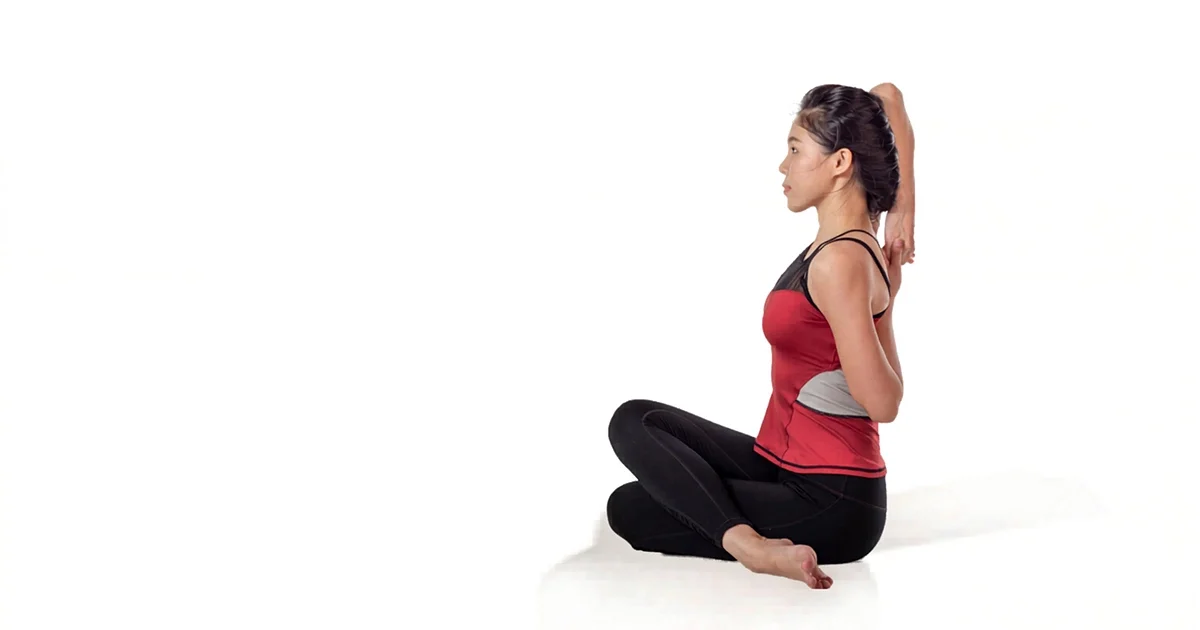
Gomukhasana-Cow Face Pose
Gomukhasana (Cow Face Pose)
Table of Contents
- Introduction
- How to Do Gomukhasana
- Benefits
- Tips for Better Practice
- Why Learn with a Yoga Teacher or Instructor
- Cautions and Contraindications
- Conclusion
- FAQS
Introduction
Gomukhasana is one of yoga’s more anatomically clever postures. It looks like a seated pose that opens the hips, and it does — but simultaneously, the arm position creates one of the more effective shoulder and chest stretches in the practice. Two major areas of chronic tension addressed in one shape.
Go means cow, mukha means face or mouth, asana means posture. The stacked knees supposedly resemble the lips of a cow; the raised elbow is one ear. The analogy is a stretch, but the pose isn’t.
What makes Gomukhasana particularly useful is that it addresses asymmetry. Almost everyone is tighter on one side than the other — one hip opens more readily, one shoulder has better range of motion. Gomukhasana makes this imbalance impossible to ignore and, practiced consistently, works to reduce it.
How to Do Gomukhasana
Sit on the floor with legs extended. Bend the right knee and slide the right foot to the outside of the left hip. Then bend the left knee and stack the left knee directly on top of the right knee, bringing the left foot to the outside of the right hip. Both knees should be stacked in the midline, one above the other, with the feet out to opposite sides.
This is the leg position. For many people with tight hips, getting both knees to stack will take time. A folded blanket under the sit bones helps. Some people need to start with one leg in the full position and the other leg extended.
Now the arms: raise the right arm overhead, bend the elbow, and let the right hand fall between the shoulder blades. Reach the left arm out to the side, bend the elbow behind the back and reach upward, working the left hand toward the right hand. If the hands meet, clasp fingers. If they don’t, use a strap.
Hold for 30 to 60 seconds. Release, uncross the legs, and switch to the other side — left leg on top, arms reversed.
Benefits
Deep hip external rotation stretch. The stacked-knee position stretches the piriformis, gluteus medius, and other external rotators of the hip on the side of the lower leg. For people with tight hips from sitting, this is a significant and specific stretch that many other hip openers don’t provide.
IT band and outer hip release. The position also creates length in the iliotibial band on the lower-leg side, which is particularly useful for runners and cyclists who develop IT band syndrome.
Shoulder and triceps stretch. The raised arm bending behind the head stretches the triceps and the shoulder in internal rotation. The lower arm reaching up behind the back stretches the anterior shoulder and pectoral region. Together, both arms in Gomukhasana provide a comprehensive shoulder girdle stretch.
Thoracic spine opening. The arm position naturally opens the thoracic spine as the shoulders work in opposite directions. People with thoracic stiffness often feel a release through the mid-back as the pose settles.
Symmetry assessment and work. Because almost everyone is tighter on one side, the pose functions as a diagnostic tool — it shows exactly where the imbalances are — and as the corrective work to address them. Holding the tighter side a little longer is a practical modification.
Tips for Better Practice
- Don’t force the knee stack. If the knees can’t stack without pain or significant strain, work with one leg in position and one extended. The hip stretch is still available; it just takes more time to develop.
- Sit on a blanket. Elevating the hips helps the pelvis tilt forward, which makes both the leg position and the upright spine easier.
- Use a strap for the arms. The shoulders don’t need to reach each other to get the stretch benefit. A strap allows both arms to work at the appropriate tension without the shoulder having to force range it doesn’t have.
- Check that both sit bones are grounded. The hip of the top leg tends to lift off the floor as a compensatory movement. Keep it down.
- Hold the tighter side longer. Most people have a noticeably tighter combination — one leg, one arm arrangement — and spending an extra 20 to 30 seconds there is practical corrective work.
Why Learn with a Yoga Teacher or Instructor
The knee stacking is the aspect where teacher guidance matters most. Forcing the knees into a stack when the hips are very tight can create medial knee stress — the rotational force that the tight hip can’t accommodate ends up at the knee joint instead. A teacher can see when this is happening and help the student find the modification that allows the hip stretch without the knee strain.
The arm position also benefits from teacher input: which shoulder has more limitation, how to use the strap effectively, and whether the thoracic position is appropriate for the student’s spine.
Cautions and Contraindications
- Knee injuries: The rotational force at the knee in the full leg position can be significant with tight hips. Use the modification (one leg extended) if there’s any knee discomfort.
- Hip replacement: Post-surgical movement restrictions vary by individual and surgical approach. Get clearance from the surgeon before attempting deep hip external rotation.
- Shoulder impingement or rotator cuff tears: The arm positions in Gomukhasana load the shoulder in internal rotation and combined with the arm reaching overhead. These positions may aggravate existing shoulder pathology.
- Sacroiliac joint dysfunction: The asymmetrical hip position can stress the SI joint in some individuals. Monitor carefully.
Conclusion
Gomukhasana is one of yoga’s more comprehensive single postures. Hips and shoulders in one shape — two areas where most people carry significant chronic tension, addressed simultaneously. The asymmetry it reveals is genuinely useful information, and the consistent practice of working both sides is practical corrective work that accumulates meaningfully over time.
It deserves more attention than it typically gets
FAQS
Q: What does Gomukhasana stretch?
A: The outer hip and glute of the bottom leg, plus the shoulder and tricep of the upper arm. It’s a dual stretch that hits areas most other poses miss.
Q: My arms don’t connect behind my back. What do I do?
A: Use a strap. Hold one end above and grab it from below. Over time, the gap closes.
Q: My knee hurts in Gomukhasana. Should I push through?
A: No. Knee pain in this pose often comes from forcing the hip into a position it’s not ready for. Sit on a block to reduce the angle or skip it.
Q: Is Gomukhasana good for IT band tightness?
A: The outer hip stretch can help with IT band-related tightness over time. It’s not a quick fix, but consistent practice helps.
Q: How long should I hold Gomukhasana?
A: 1 to 2 minutes per side gives the connective tissue time to respond.
Q: Can I do just the legs without the arm position?
A: Yes, absolutely. The two parts of the pose are independent. Do what’s available to you.