
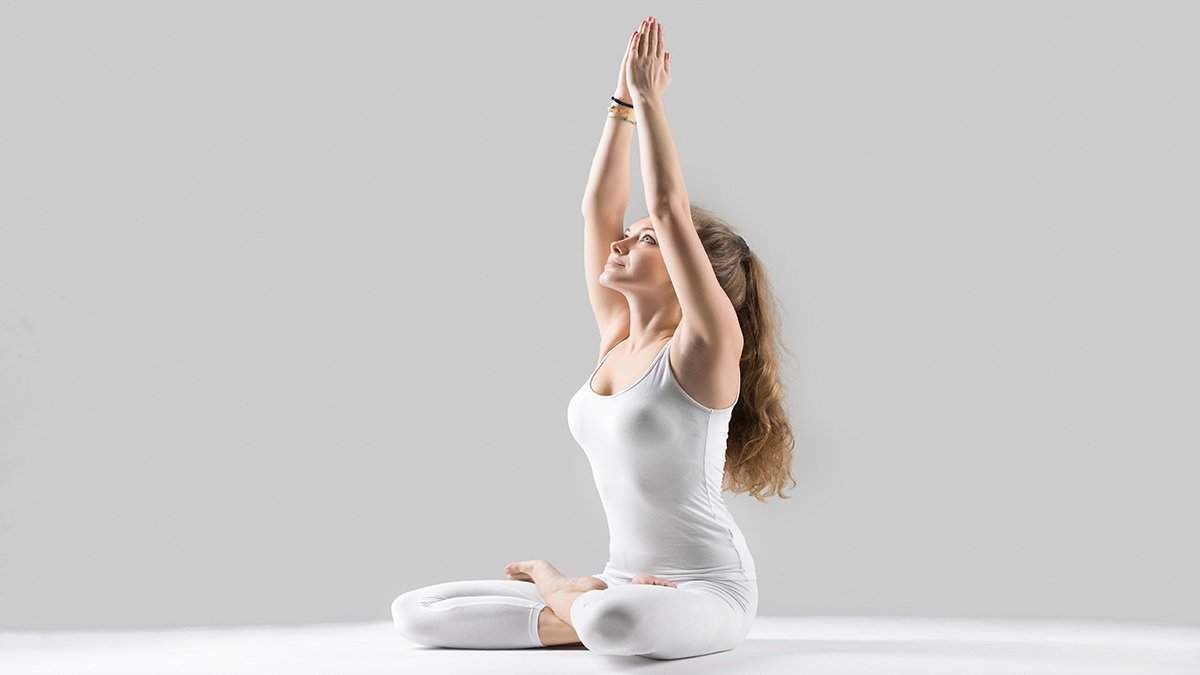
Have you ever felt like your energy is scattered, or your posture is collapsing after hours of sitting? We’ve all had those days where we feel physically “heavy” and mentally stuck. In the world of yoga, there is a posture designed to fix exactly that.
Enter Parvatasana, or the Mountain Pose. While most people are familiar with standing mountain poses, the seated version of Parvatasana is a hidden gem for anyone looking to realign their spine and lift their spirits. It’s a posture that embodies strength, stability, and unshakeable focus—just like a mountain.
Table of Contents
The name comes from the Sanskrit words Parvata, meaning “mountain,” and Asana, meaning “pose.” In this posture, your body takes on a triangular shape that mimics a majestic peak.
Unlike the standing version (often called Tadasana), the seated Parvatasana focuses on rooting your base into the earth while stretching your arms toward the sky. It’s about creating an upward pull that lengthens the spine and clears the mind. In traditional yoga, it is considered a vital pose for preparing the body for deep meditation because it balances the flow of energy (Prana) through the central nervous system.
You can do this pose almost anywhere—on your yoga mat, or even in a chair at your office.
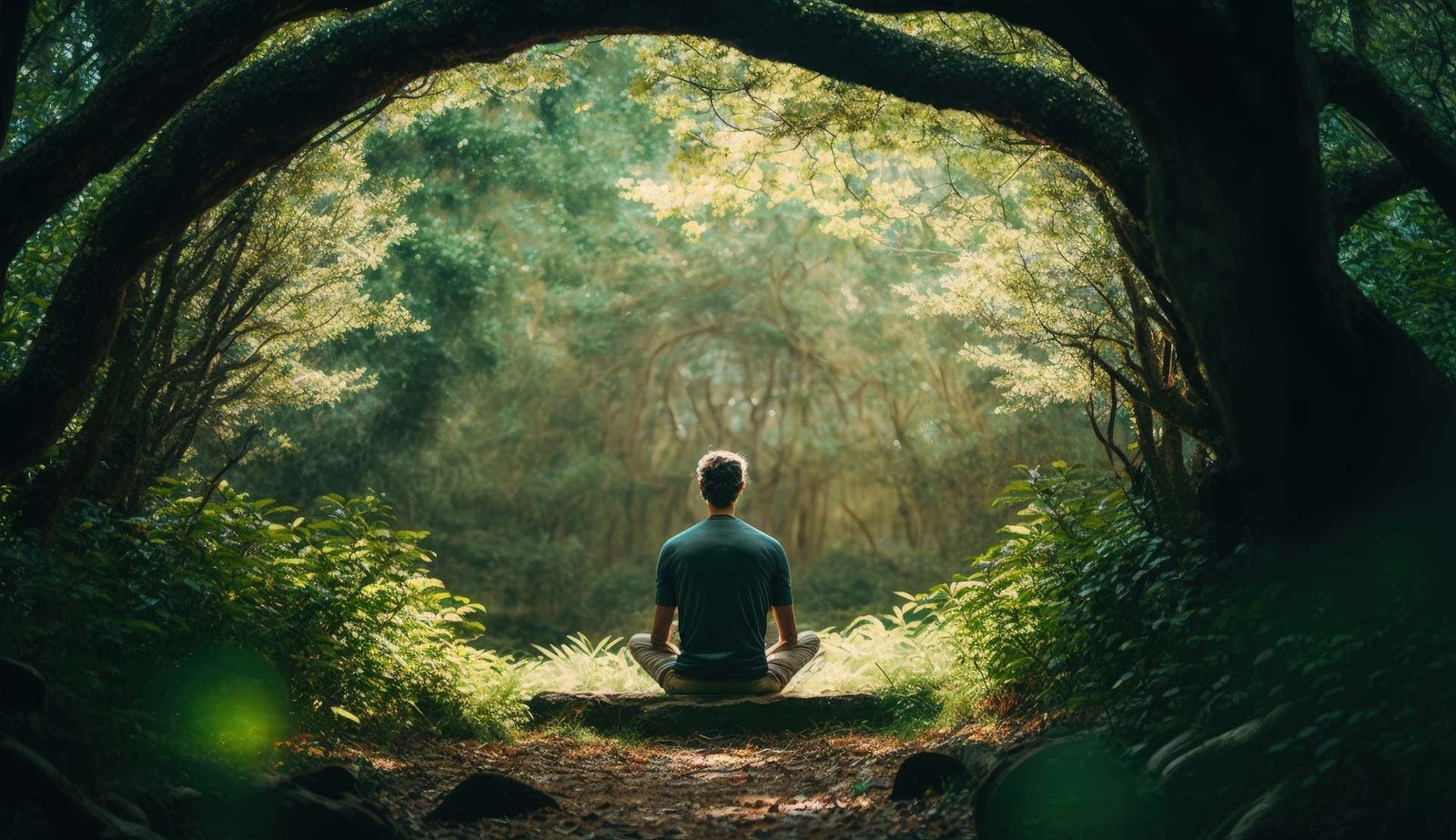
Find Your Foundation: Sit comfortably in Padmasana (Lotus Pose) or Siddhasana. If those are too intense, a simple cross-legged position (Sukhasana) works perfectly.
Align Your Spine: Ensure your back is straight and your shoulders are relaxed.
The Interlock: Interlace your fingers in front of you.
The Ascent: As you inhale deeply, slowly raise your arms above your head.
Turn the Palms: Turn your palms upward toward the ceiling.
Reach for the Sky: Stretch your arms as high as they can go without lifting your sit-bones off the floor. Feel your ribs lifting and your spine decompressing.
Breathe and Hold: Keep your head straight and gaze forward. Hold for 30 to 60 seconds while taking slow, deep breaths.
The Descent: Exhale as you slowly lower your arms and release the interlock.
The benefits of Parvatasana go deep beneath the surface:
Deepens Breathing: By lifting the ribcage, you give your lungs more room to expand. This increases oxygen intake, which naturally boosts your energy levels.
Stimulates Digestion: The upward pull creates a subtle “vacuum” effect in the abdomen, which helps stimulate the digestive organs and can assist with constipation.
Tones Abdominal Muscles: As you reach upward, you engage your core, helping to tone and strengthen the stomach area.
The benefits of Parvatasana go deep beneath the surface:
Deepens Breathing: By lifting the ribcage, you give your lungs more room to expand. This increases oxygen intake, which naturally boosts your energy levels.
Stimulates Digestion: The upward pull creates a subtle “vacuum” effect in the abdomen, which helps stimulate the digestive organs and can assist with constipation.
Tones Abdominal Muscles: As you reach upward, you engage your core, helping to tone and strengthen the stomach area.
Yoga should feel empowering, not painful. Here’s how to make it work for you:
The Chair Option: If sitting on the floor is hard for your knees, sit in a sturdy chair with your feet flat on the ground and perform the arm movements there.
Elbow Check: If you can’t fully straighten your arms, don’t worry! Keep a slight bend in your elbows until your shoulders become more flexible.
Wall Support: If you find it hard to keep your back straight, sit with your back against a wall. This gives you a physical guide to ensure your spine is truly vertical.
Even a gentle mountain needs to be climbed carefully:
Shoulder Injuries: If you have acute shoulder pain or a recent injury, avoid lifting your arms all the way up.
Knee Pain: If the seated position hurts your knees, move to a chair or stretch your legs out in front of you.
High Blood Pressure: Don’t hold your breath while stretching. Keep the breath flowing smoothly to avoid unnecessary pressure.
Parvatasana is a beautiful reminder that we can find strength and stillness even in the middle of a busy day. It takes only a minute to reach your arms to the sky, but the sense of “uprightness” and clarity it brings can last for hours. Next time you feel your energy sagging, take a breath, find your base, and become the mountain.