
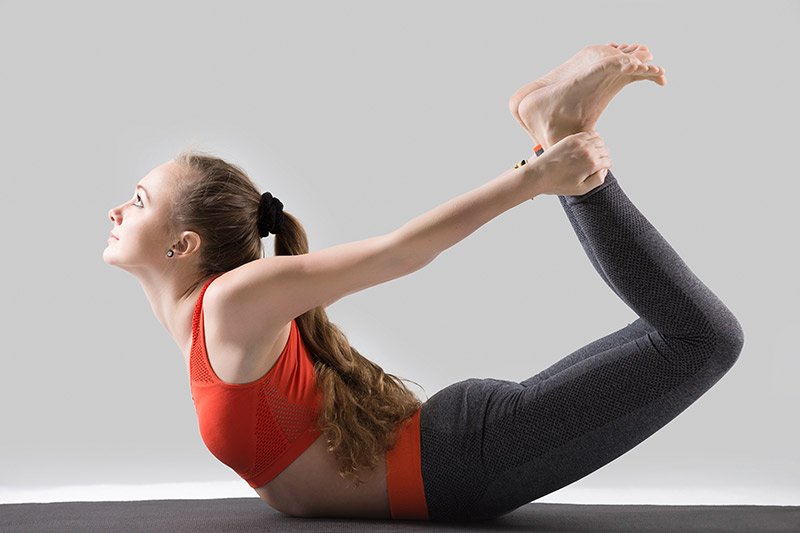
Dhanurasana, commonly known as Bow Pose, is a powerful backbend that energizes the entire body. The name comes from the Sanskrit words Dhanur (bow) and Asana (pose), as the body takes the shape of a drawn bow with the arms acting like the string. This pose is highly beneficial for improving spinal flexibility, strengthening muscles, and stimulating internal organs. It is often included in intermediate yoga practices and therapeutic routines for overall vitality.
Steps to Perform Dhanurasana
- Starting Position: Lie flat on your stomach on a yoga mat with your legs together and arms resting beside your body.
- Bend Your Knees: Slowly bend your knees and bring your heels toward your buttocks.
- Hold Your Ankles: Reach back with your hands and hold your ankles firmly. Keep your knees hip-width apart.
- Inhale and Lift: As you inhale, lift your chest and thighs off the ground simultaneously by pulling your legs upward and backward.
- Balance on Abdomen: Your body weight should rest on your abdomen while your chest opens and shoulders roll back.
- Gaze Forward: Look straight ahead and keep your neck relaxed.
- Hold the Pose: Maintain the posture for 15–30 seconds with steady breathing.
- Release Slowly: Exhale and gently release your ankles, lowering your chest and legs back to the floor. Relax in a prone position.
Benefits of Dhanurasana
- Strengthens the Back and Spine: Enhances spinal flexibility and strengthens the back muscles.
- Improves Posture: Helps correct slouching and promotes an upright posture.
- Stimulates Digestive Organs: Massages abdominal organs, improving digestion and reducing constipation.
- Boosts Energy Levels: Activates the body and reduces fatigue and lethargy.
- Enhances Lung Capacity: Expands the chest and improves breathing efficiency.
- Strengthens Muscles: Tones the arms, legs, thighs, and core muscles.
- Reduces Stress: Opens the chest and helps relieve tension, promoting emotional balance.
Tips for Practicing Dhanurasana
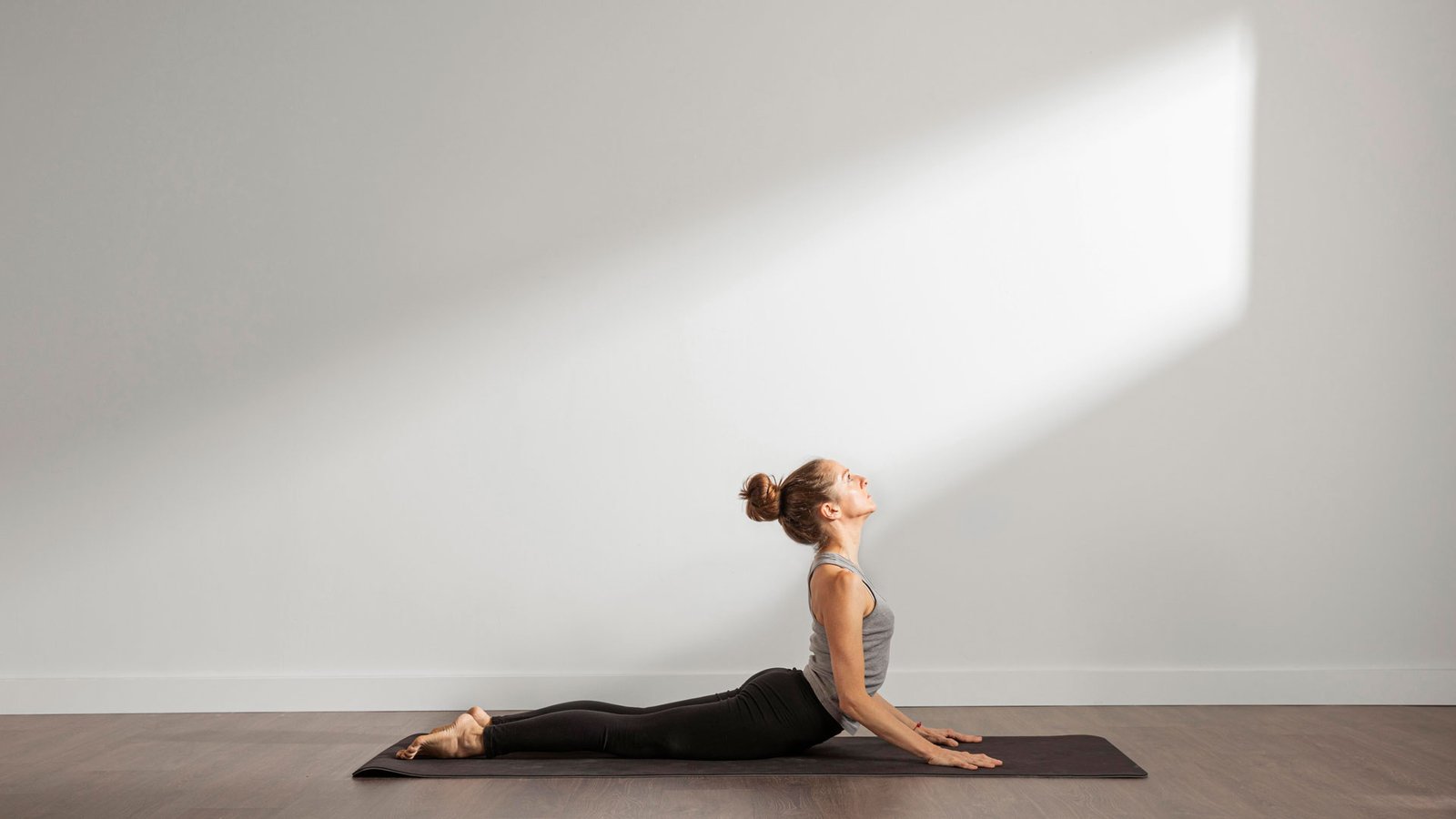
- Warm Up Properly: Practice gentle stretches or poses like Cobra (Bhujangasana) before attempting Dhanurasana.
- Keep Knees Aligned: Avoid spreading your knees too wide; keep them hip-width apart for better alignment.
- Use a Strap if Needed: Beginners can use a yoga strap around the ankles if reaching them is difficult.
- Engage Core Muscles: Activate your core to support the lower back and maintain balance.
- Avoid Jerky Movements: Lift your body smoothly using breath control rather than force.
- Focus on Breathing: Deep and steady breathing helps maintain the pose comfortably.
Cautions and Contraindications
- Back or Spine Injuries: Avoid this pose if you have severe back pain, herniated discs, or spinal injuries unless guided by an expert.
- High or Low Blood Pressure: Practice cautiously, as the pose can affect blood circulation.
- Abdominal Conditions: Avoid if you have ulcers, hernia, or recent abdominal surgery.
- Pregnancy: Not recommended during pregnancy due to pressure on the abdomen.
- Neck Issues: Keep the neck neutral and avoid excessive strain while lifting the chest.
- Overstretching Risk: Do not force your body into the pose; progress gradually.
Dhanurasana is a dynamic and energizing yoga pose that offers a perfect combination of strength, flexibility, and internal stimulation. It plays a significant role in improving spinal health, boosting digestion, and enhancing overall vitality. With regular and mindful practice, this pose can help unlock physical strength and mental resilience. However, it is essential to practice with proper alignment and awareness, respecting your body’s limits. Gradual progression and consistency will allow you to experience the full benefits of this powerful asana safely and effectively.