

- (+612) 2531 5600
- info@la-studioweb.com
- PO Box 1622 Colins Street West Victoria 8077 Australia
©2023 Nilah . All rights reserved.
Bharat yogas
Introduction to Meditation (Dhyana)
Meditation, known in Sanskrit as Dhyana, is one of the most profound practices of yoga. Rooted in ancient Indian philosophy, meditation is not merely a relaxation technique but a systematic discipline for mastering the mind and realizing inner awareness.
Classical yoga texts such as the Patanjali Yoga Sutra and the Bhagavad Gita describe meditation as the highest tool for mental clarity, emotional balance, and spiritual growth. In today’s fast-paced, stress-driven world, these teachings provide timeless guidance for achieving inner peace and holistic wellness.
This article explores the meaning of meditation, its philosophical foundation, methods, benefits, and spiritual purpose, with authentic references to Patanjali and the Bhagavad Gita.
What Is Meditation (Dhyana)?
The Sanskrit word Dhyana comes from the root dhyai, meaning to contemplate or reflect deeply. Meditation is the state in which the mind becomes calm, focused, and steady without effort.
Unlike ordinary thinking, meditation is:
Continuous awareness
Free from distraction
Free from mental struggle
Centered in the present moment
Meditation allows the practitioner to move beyond surface-level thoughts and experience deeper consciousness.
Meditation in Patanjali Yoga Sutra
The Patanjali Yoga Sutra is the most authoritative text on meditation and yogic psychology. Patanjali defines yoga as the control of mental fluctuations and places meditation at the heart of this process.
Definition of Yoga
“Yogas chitta-vritti-nirodhah”
(Yoga Sutra 1.2)
Yoga is the cessation of the fluctuations of the mind.
Meditation is the primary method to achieve this mental stillness.
Dhyana in Ashtanga Yoga (Eight Limbs of Yoga)
Meditation is the seventh limb of Ashtanga Yoga:
Yama – moral discipline
Niyama – personal observances
Asana – stable posture
Pranayama – breath regulation
Pratyahara – withdrawal of senses
Dharana – concentration
Dhyana – meditation
Samadhi – absorption
This structure emphasizes that meditation develops naturally after ethical living, physical stability, breath control, and mental focus.
Patanjali’s Definition of Meditation
“Tatra pratyaya-ekatānata dhyānam”
(Yoga Sutra 3.2)
Meditation is the uninterrupted flow of awareness toward a single object.
This sutra explains that meditation is not forced concentration. It is a smooth, continuous flow of attention, where the mind remains effortlessly absorbed.
Difference Between Concentration and Meditation
| Aspect | Dharana (Concentration) | Dhyana (Meditation) |
|---|---|---|
| Effort | Requires effort | Effortless |
| Nature | Interrupted focus | Continuous awareness |
| Experience | Mental control | Mental flow |
Meditation begins when concentration becomes stable and natural.
Meditation in the Bhagavad Gita
The Bhagavad Gita presents meditation as a practical spiritual discipline integrated into everyday life. Lord Krishna explains meditation in Chapter 6 (Dhyana Yoga).
Regular Practice of Meditation
“Yogī yuñjīta satatam ātmānaṁ rahasi sthitaḥ”
(Bhagavad Gita 6.10)
A yogi should practice meditation regularly, in solitude, with a disciplined mind.
Consistency is emphasized over intensity.
Proper Posture for Meditation (According to Gita)
“Samaṁ kāya-śiro-grīvaṁ dhārayann acalaṁ sthiraḥ”
(Gita 6.13)
The body, head, and neck should be held upright and steady.
A stable posture helps reduce physical disturbance and supports deeper meditation.
Balanced Lifestyle and Meditation
The Bhagavad Gita highlights moderation:
“Nātyaśnatas tu yogo ’sti”
(Gita 6.16)
Meditation is not possible for those who indulge excessively or practice extreme austerity.
A balanced lifestyle supports mental clarity and meditation success.
Purpose of Meditation in Yoga Philosophy
1. Control of the Mind
Meditation stabilizes mental fluctuations, allowing awareness to rest in stillness.
2. Self-Realization
“Tadā draṣṭuḥ svarūpe ’vasthānam”
(Yoga Sutra 1.3)
When the mind becomes still, the practitioner experiences their true nature.
3. Freedom from Suffering
“Duḥkha-saṁyoga-viyogaṁ yoga-saṁjñitam”
(Gita 6.23)
Meditation disconnects the mind from suffering caused by attachment and ignorance.
Meditation and the Restless Mind
The Bhagavad Gita acknowledges mental restlessness:
“Cañcalaṁ hi manaḥ”
(Gita 6.34)
The mind is restless, turbulent, and difficult to control.
Lord Krishna reassures:
“Abhyāsena tu kaunteya vairāgyeṇa ca gṛhyate”
(Gita 6.35)
Through practice (abhyasa) and detachment (vairagya), the mind becomes steady.
Obstacles to Meditation (According to Patanjali)
Patanjali identifies common mental obstacles:
Restlessness
Laziness
Doubt
Attachment
Sensory distraction
Meditation gradually dissolves these obstacles through awareness and discipline.
Meditation and the Three Gunas
According to the Bhagavad Gita, the mind is influenced by:
Tamas – inertia and dullness
Rajas – activity and desire
Sattva – clarity and harmony
Meditation reduces tamas and rajas while increasing sattva, leading to clarity and peace.
Stages of Meditation (Samyama)
Patanjali describes three advanced stages:
Dharana – concentration
Dhyana – meditation
Samadhi – absorption
Together, these form Samyama, the deepest yogic discipline.
Benefits of Meditation in Modern Life
Regular meditation helps:
Reduce stress and anxiety
Improve emotional balance
Enhance concentration
Promote mental clarity
Develop self-discipline
Support holistic wellness
While these benefits are valuable, yoga emphasizes that self-realization is the ultimate purpose.
Meditation in Daily Life
The Bhagavad Gita integrates meditation with action:
“Karmany evādhikāras te”
(Gita 2.47)
Meditation enhances awareness in action, allowing individuals to live mindfully without attachment to results.
Common Myths About Meditation
Meditation is not thought suppression
Meditation is not escapism
Meditation is not instant enlightenment
Meditation is a gradual inner transformation.
Meditation and Liberation (Moksha)
Both Patanjali and the Bhagavad Gita describe meditation as the path to liberation from ignorance, ego, and suffering.
Meditation dissolves false identification with body and mind, revealing the eternal witness within.
Conclusion: The Essence of Meditation
Meditation is the soul of yoga.
Rooted in the wisdom of the Patanjali Yoga Sutra and the Bhagavad Gita, meditation is a timeless practice for inner peace, self-awareness, and spiritual growth.
In silence, the mind settles.
In stillness, truth is revealed.
In awareness, freedom is experienced.
Meditation is not an escape from life—it is a return to the essence of life.
Latest News
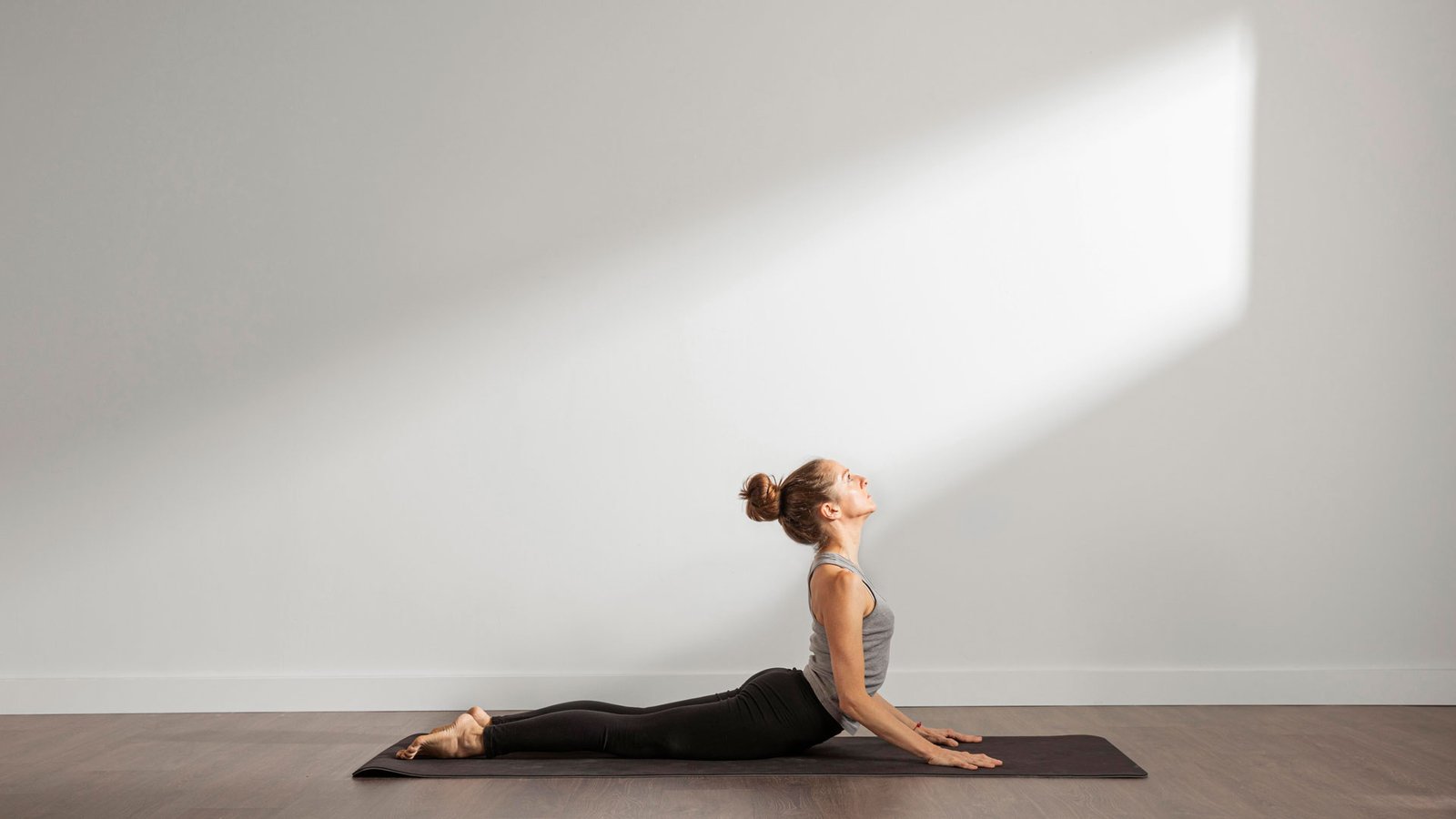
Bhujangasana-Cobra Pose

Viparita Shalabhasana Superman Pose-Reverse Locust Pose
Copyright 2026© bharatyogas.com. All Rights Reserved.